A high-performance hook knife with an open sweep, for finishing cuts. The more open sweep allows you to get a smoother knife finish in the bowl, particularly in cooking spoons or anything larger.
If you’re looking for more of an all-rounder, check out the Compound Hook.
I have carved spoons professionally for nearly ten years and have used hook knives made by many excellent toolmakers. Over time, I began making my own, combining the best qualities of the knives I had used along with some of my own unique additions. After several years of refinement, this is the tool I’ve arrived at: great geometry, easy to sharpen and a joy to use.
An optional handmade leather sheath is also available.
The Blade
The blade is designed with a more open sweep and a more constant radius than the Compound Hook. I would recommend the Compound Hook for initial shipping and finishing of smaller or deeper bowls. This knife is designed to more closely match the gentle curves of larger spoons, to achieve a smoother finish.
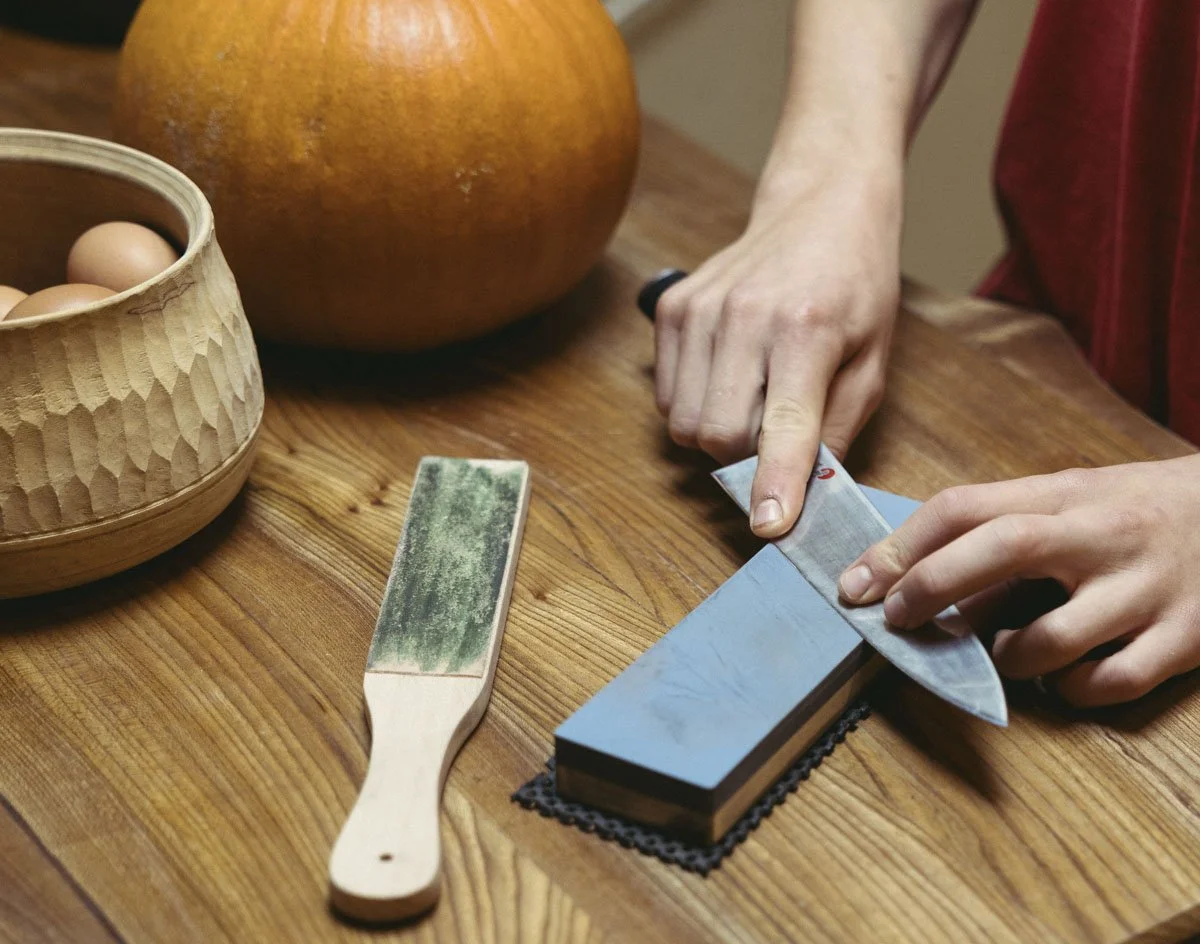
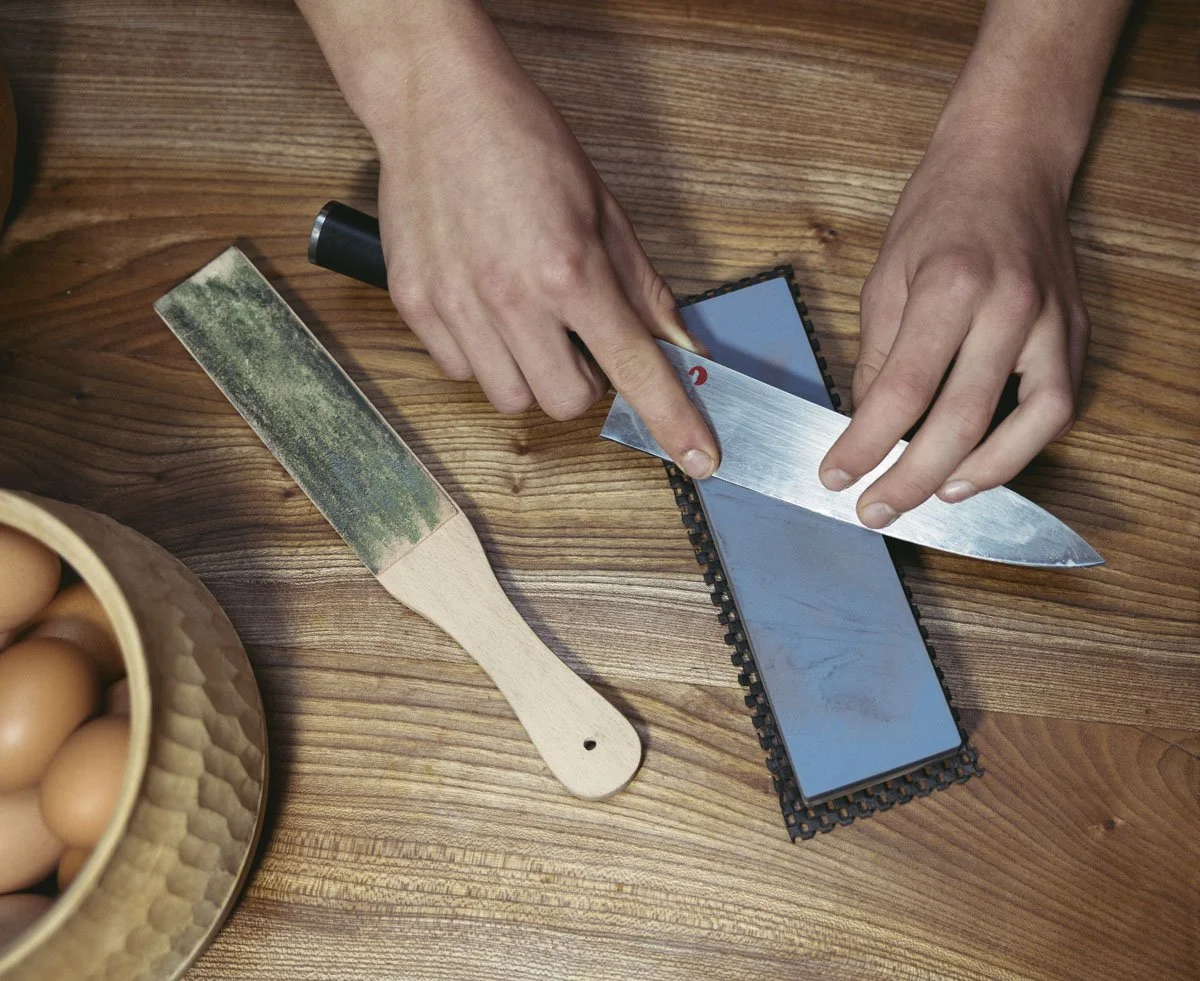
The precisely formed convex bevel gives the edge strength and allows it to ride smoothly across a hollow shape. The rounded spine adds comfort, while the forged hollow and finely ground inner rails make sharpening straightforward.
That hollow is a particularly useful detail. Because only the narrow rails need to be sharpened, there is very little steel to remove and it is much easier to preserve the blade’s geometry. The outer bevel needs very little attention during routine sharpening.
The Steel
The blade is made from a high-alloy stainless tool steel, selected after extensive research, testing and practical use.
Traditional low-alloy carbon steels can make excellent carving tools, but I believe this steel offers better performance. It takes a very fine, keen edge and combines excellent edge retention with toughness, resistance to chipping and rolling, and considerably better protection against corrosion. If you’re feeling some resistance to the idea of a stainless steel, I have written a separate article on why that might be and why I chose this steel.
Its greater wear resistance helps the edge remain sharp for longer without making the knife unnecessarily difficult to maintain. I sharpen mine with ordinary aluminium-oxide abrasives, just as I would a carbon-steel carving tool.
Stainless steel is sometimes regarded as a compromise made for convenience. This steel is not. I chose it primarily for its performance; its resistance to rust is an additional—and very welcome—advantage.
I think the reasons steels like this are less common in handmade carving tools are largely practical. They are more expensive and demanding to forge, grind and heat-treat. Those difficulties fall on the toolmaker, however, rather than the person using the finished knife.
Each blade is heat-treated in a precisely controlled kiln using a process I have carefully tested and refined. I have used this steel extensively myself and would not return to conventional carbon steel for these knives. It gives me everything I want from a carving blade, without the constant concern about rust.
The Handle
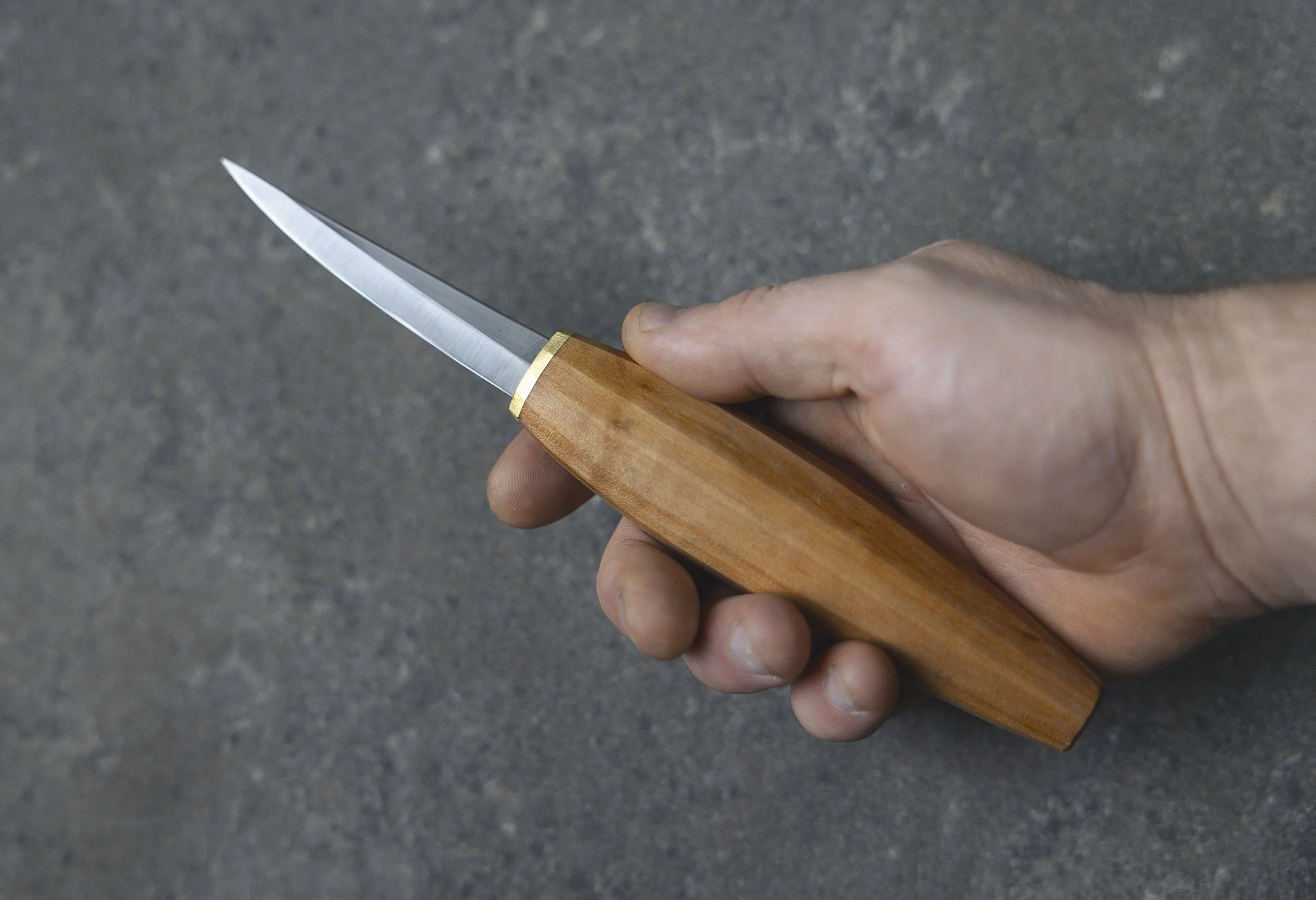
The 160 mm tapered handle is long enough to accommodate a wide variety of grips without becoming cumbersome. Its faceted shape provides a secure, comfortable grip and helps you control the angle of the blade by feel.
Each handle is made from strong, dense apple wood and finished with a solid brass bolster.
The Sheath
I strongly recommend adding a sheath. It protects the knife’s fine edge during normal storage and transport, and I don’t think you’ll regret the extra expense.
Having used several rather awkward spoon-knife sheaths over the years, I wanted to make something simpler. This design prioritises speed and ease of use: it slips on and off quickly, because a sheath that is convenient to use is far more likely to be used every time.
It is made from thick, durable leather and holds the knife securely. Like any soft leather sheath, however, it is intended to protect the edge during normal handling rather than act as a rigid safety guard. Because the knife is extremely sharp, strong sideways pressure or twisting the blade inside the sheath could allow the edge to cut the leather. Simply push the sheath straight off with your thumb rather than twisting it, and avoid carrying it where the sheath could be heavily compressed.
I’ve used this design myself for several years and find that it strikes the right balance: secure and protective in ordinary use, while remaining exceptionally quick and easy to remove.
Right-handed or Left-handed?
The knife is available in a left-handed and a right-handed version. Choose the one corresponding to your dominant hand. With an open sweep knife, I don’t think there’s much utility in having both left- and right-handed versions.

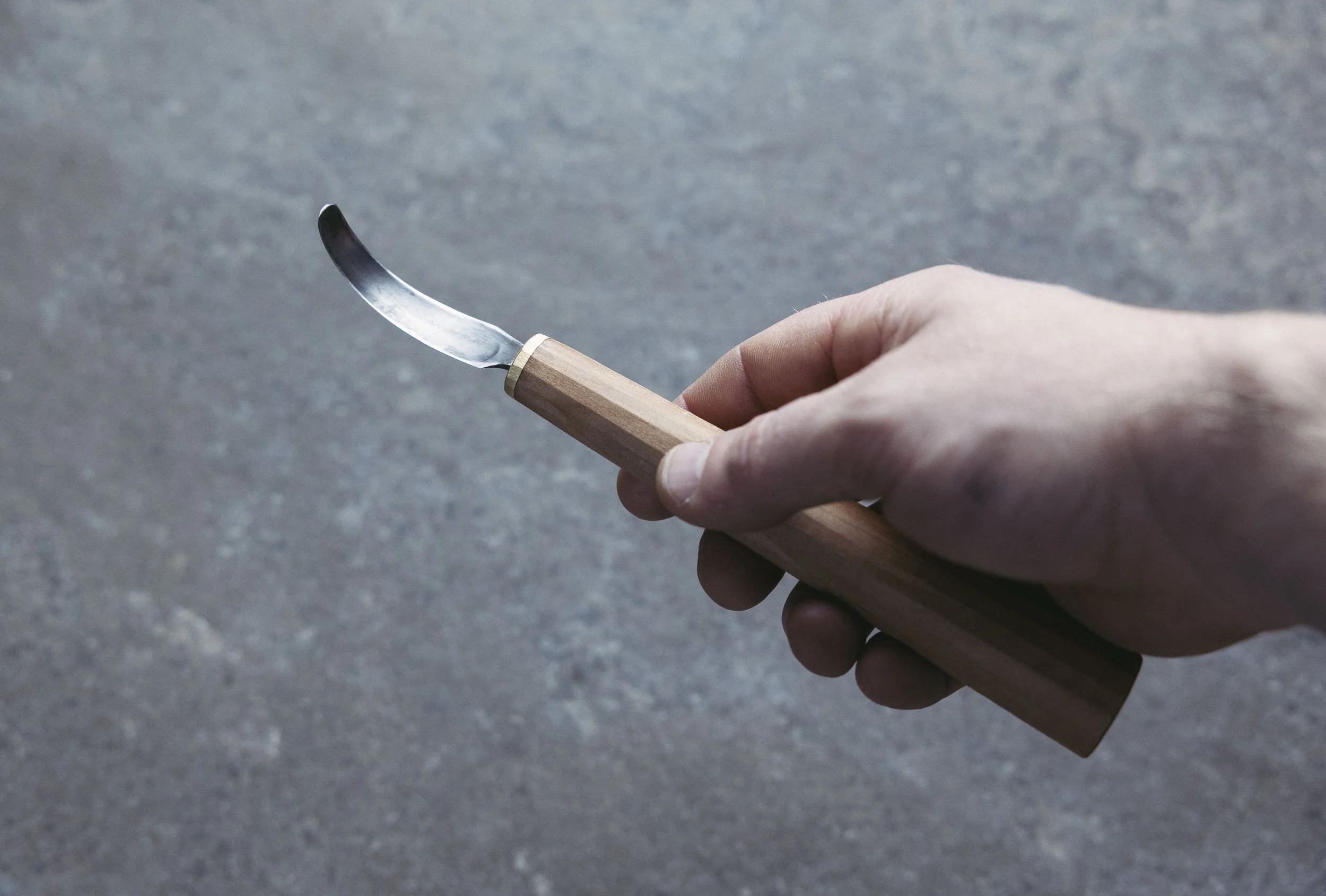 Image 1 of 6
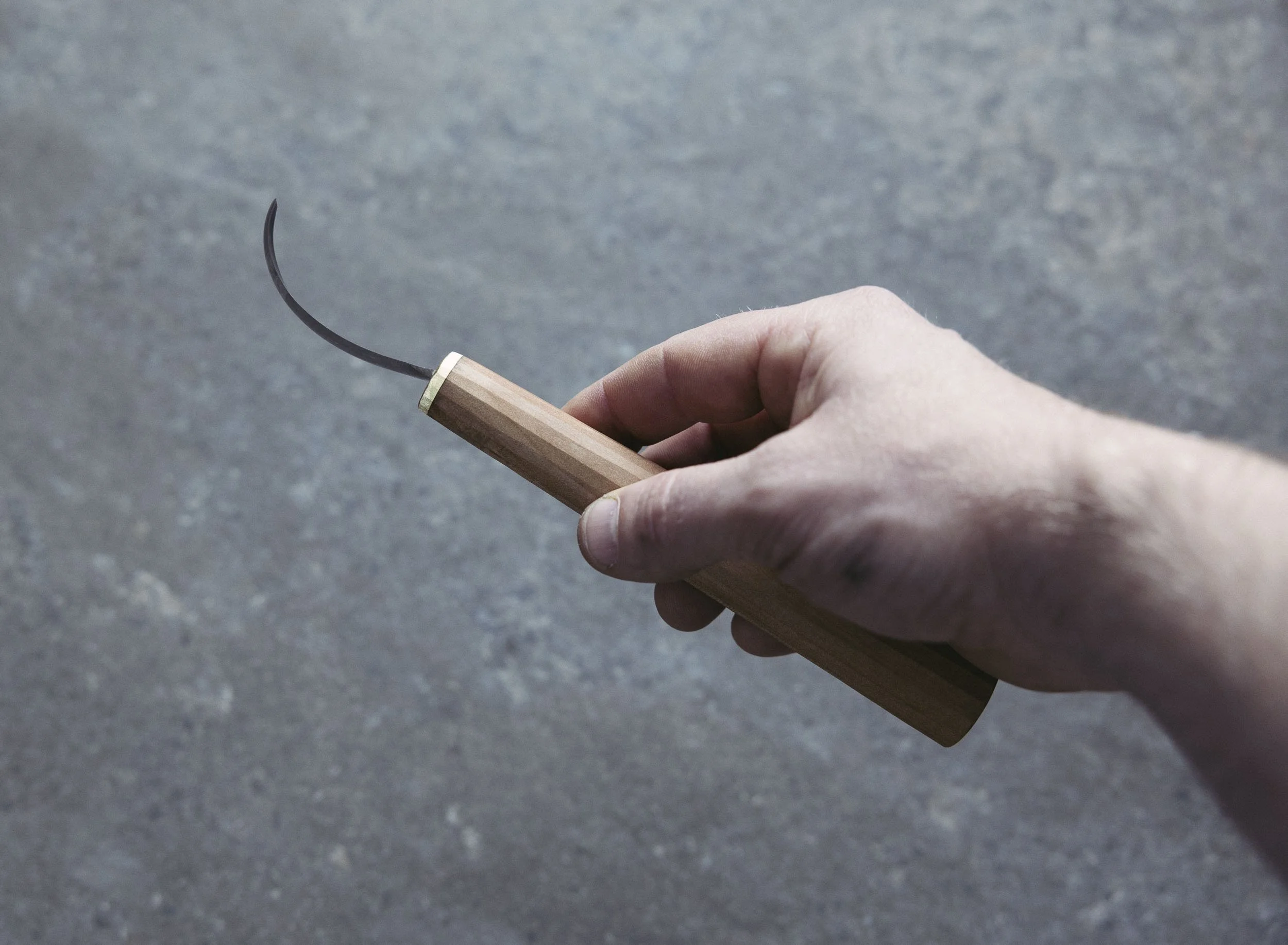 Image 2 of 6
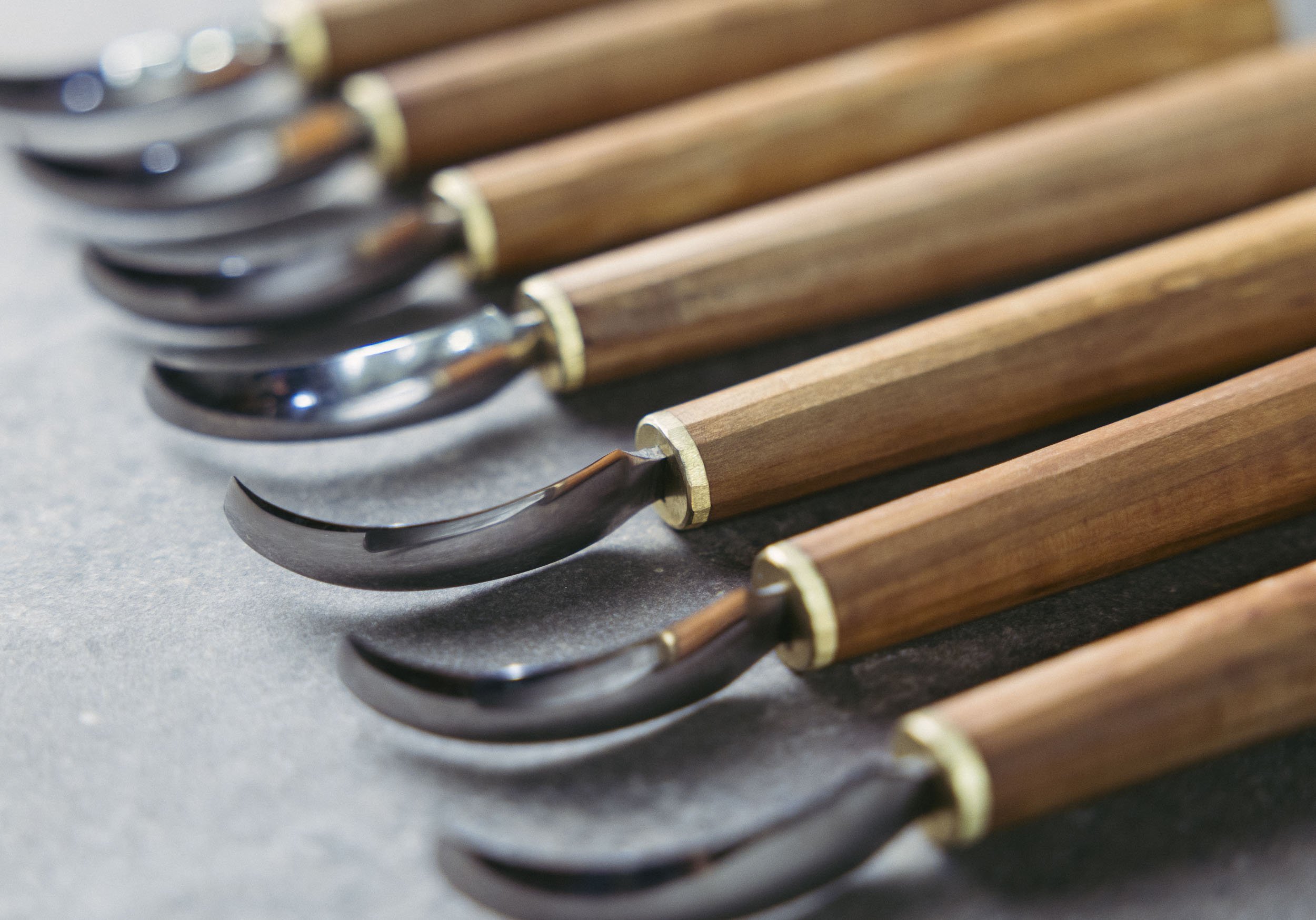 Image 3 of 6
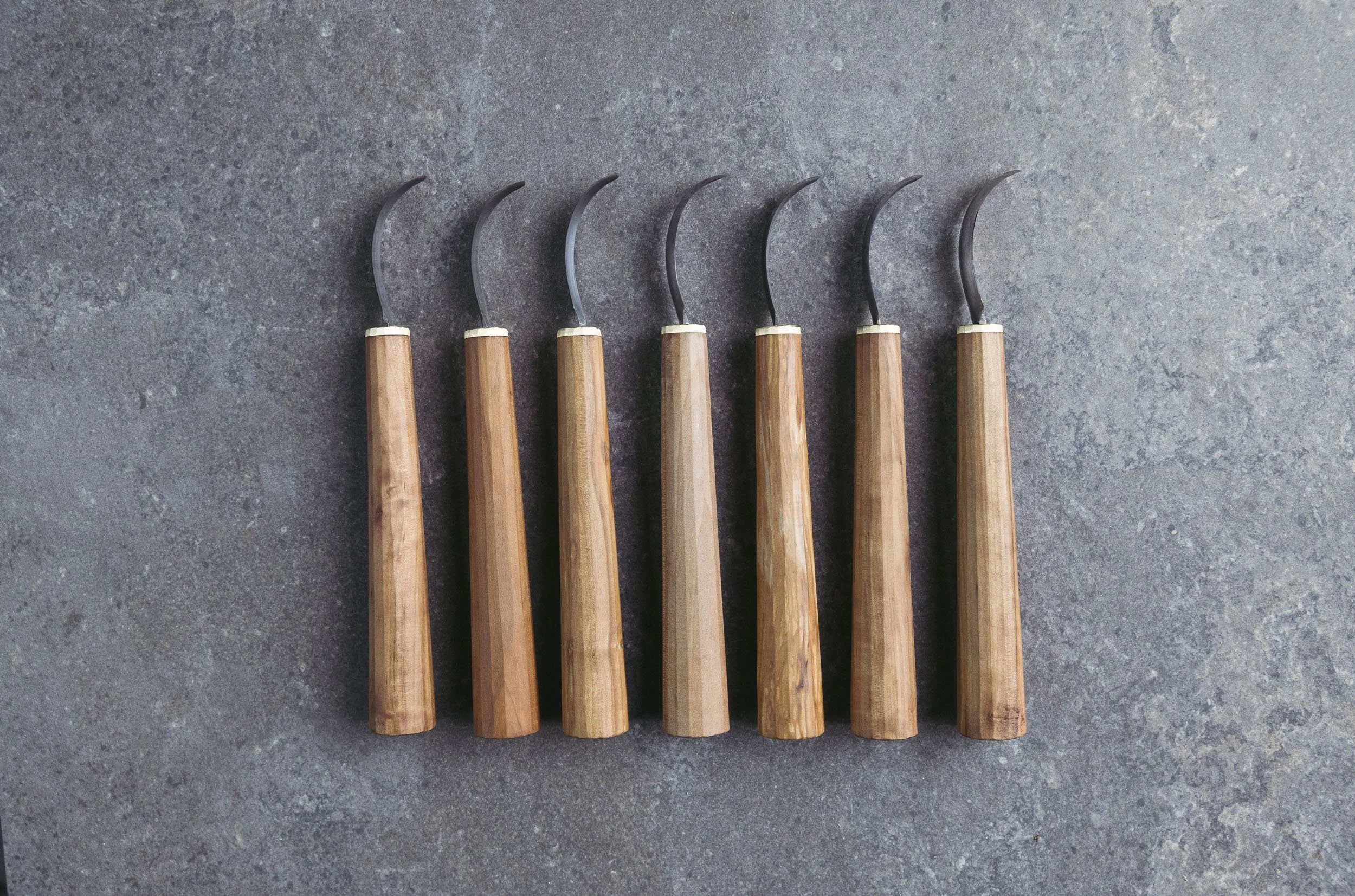 Image 4 of 6
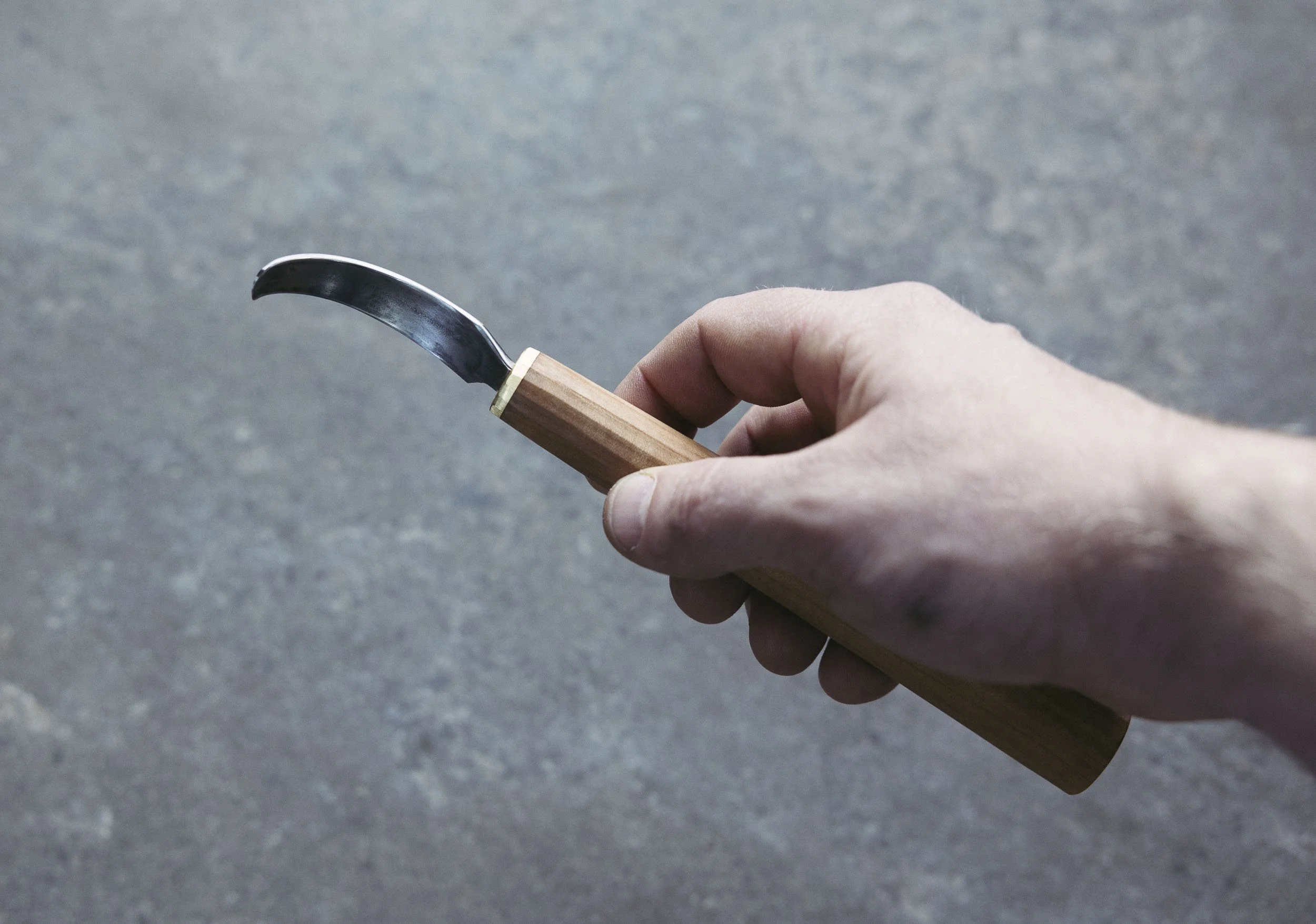 Image 5 of 6
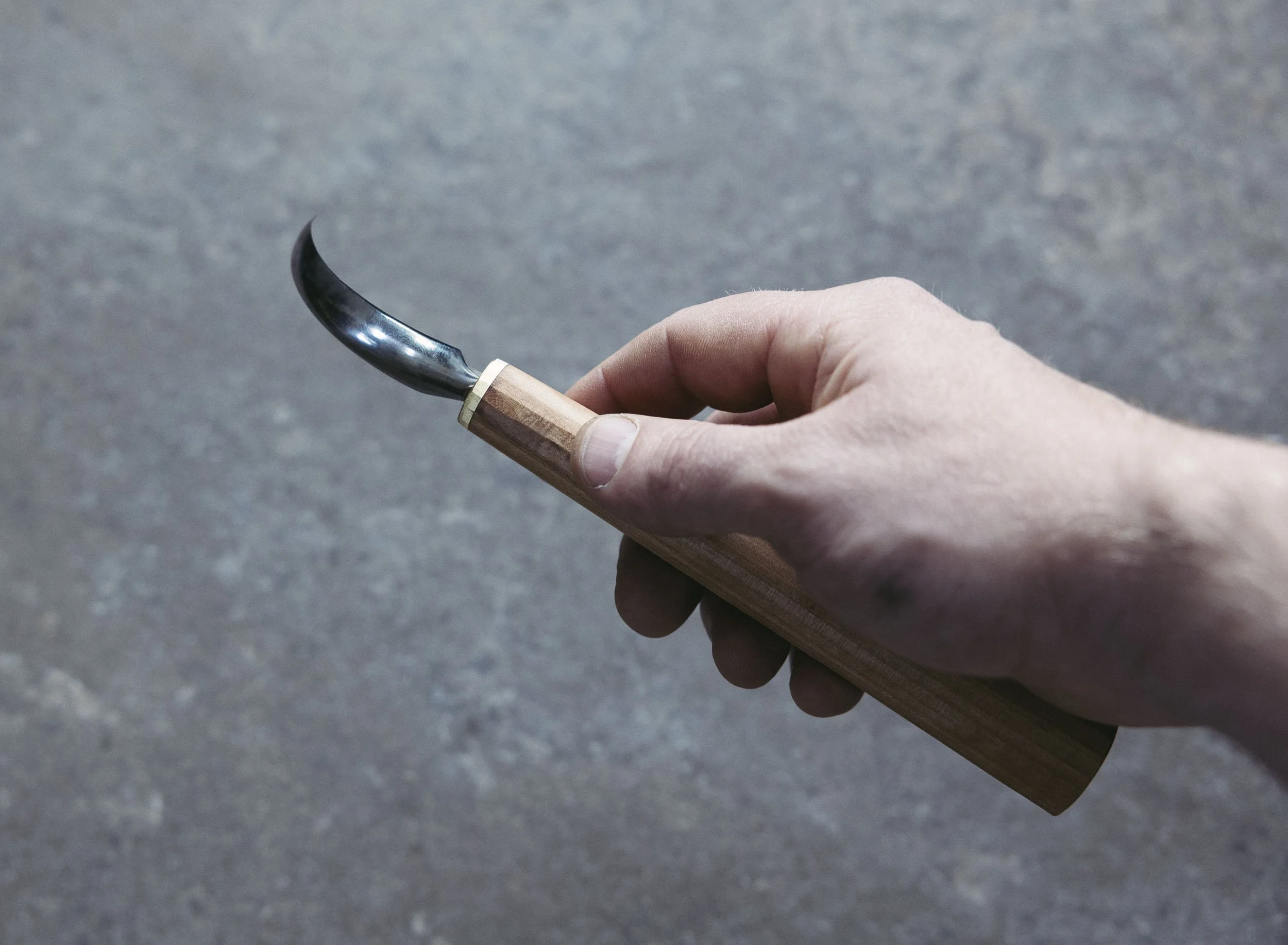 Image 6 of 6