A premium tool for carving wooden spoons. It comes with a very nice leather sheath.
I’ve been making and using my own tools for a few years now and I have slowly developed a tool that has all the best features from the many knives I own as well as my own unique additions. Having carved spoons professionally for nearly ten years, I can confidently say I know what makes a good hook knife. These are really good hook knives.
“It outperforms every hook knife I have tried. Thank you for your time and effort that you put into this knife”
- Timo, customer
The Blade
These handmade knives are inspired by my experience of carving thousands of spoons, using tools made by many great blacksmiths from around the world. They feature a compound curve, a convex bevel, a rounded spine and a forged hollow with finely ground rails.
Having a precisely shaped convex outer bevel makes the world of difference, especially as your spoon carving skills improve. The hollow inside surface is also a massive quality-of-life detail. It makes sharpening far easier. Not only do you have very little steel to remove when sharpening but you can easily avoid rounding over the inside surface. You hardly have to work on the outer bevel at all to maintain the knife.
The Steel
Currently, you can choose either high carbon steel or stainless steel. Both are high quality tool steels with the characteristics you want for spoon carving.
High carbon steels are the more common and traditional choice and many people favour it.
Stainless has the obvious benefit of corrosion resistance. Some fear that all stainless steels are harder to sharpen. This is somewhat of a misconception. While the stainless steel I use does have slightly higher wear resistance, I have had no trouble sharpening mine with regular aluminium oxide abrasives. That means it has better edge retention while also being slightly tougher than any low alloy carbon steel and having a very fine grain structure. All of these things are good!
The blade is heat treated in a specialised heat treatment kiln that is very precisely controlled. I have done a lot of testing to dial in the heat treatment processes. I am very confident in the precision of the process and the performance of the steels.
The Handle
The tapered octogonal handles are faceted for grip. They’re made from strong, dense apple wood and feature a solid brass bolster. The handle, at 160mm, is long enough to make it versatile for lots of different grips but not so long that it gets in your way.
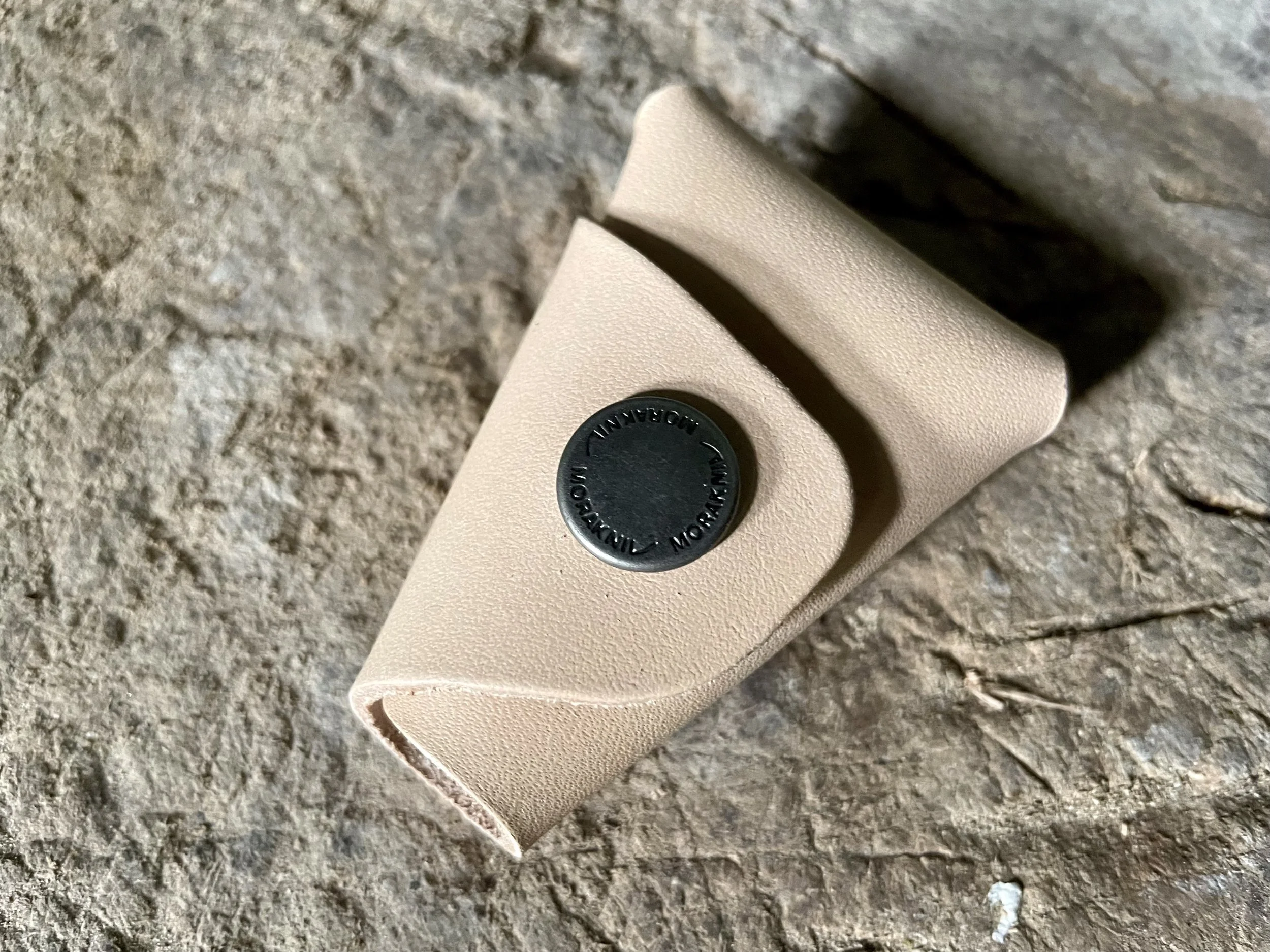
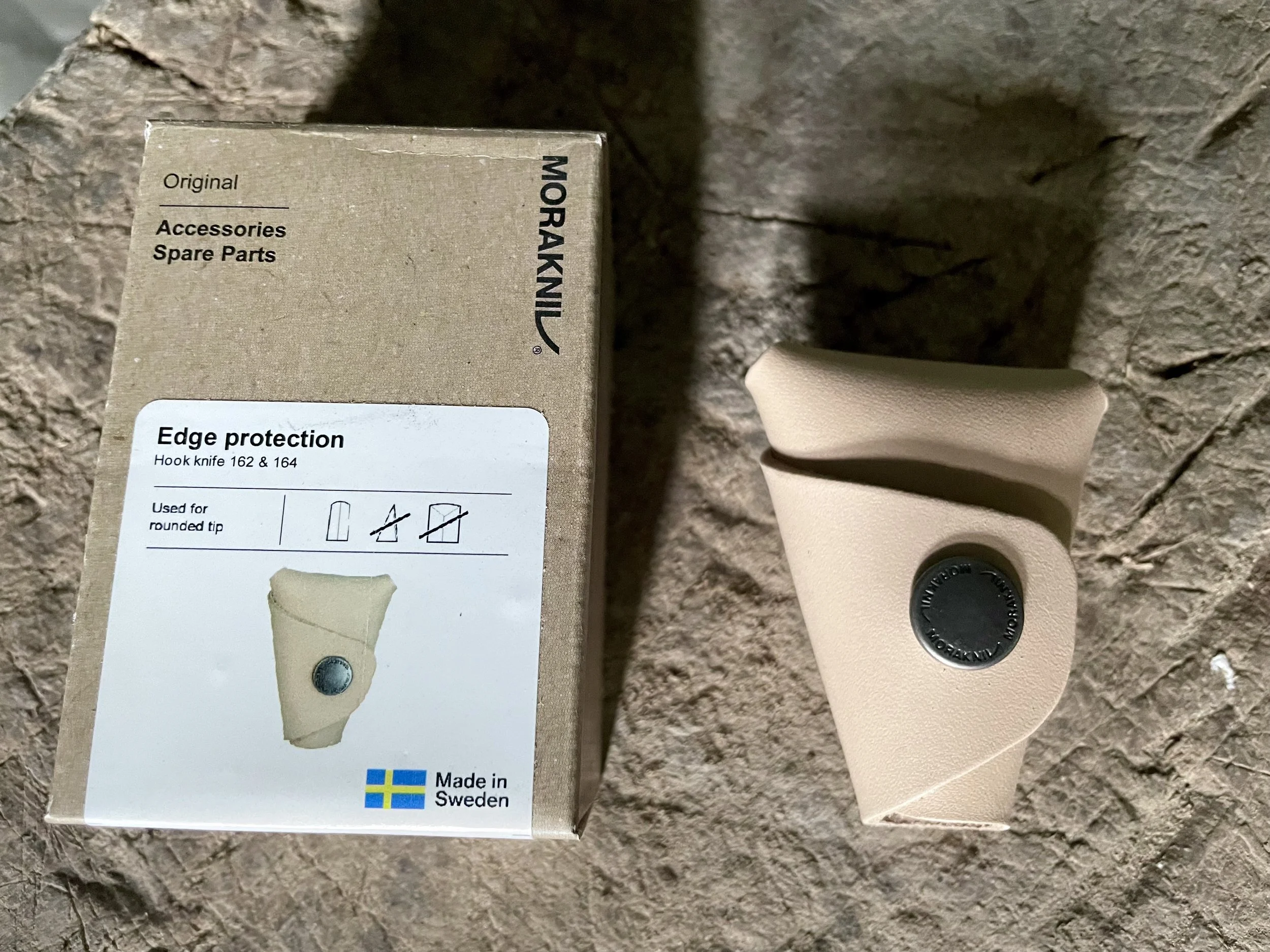
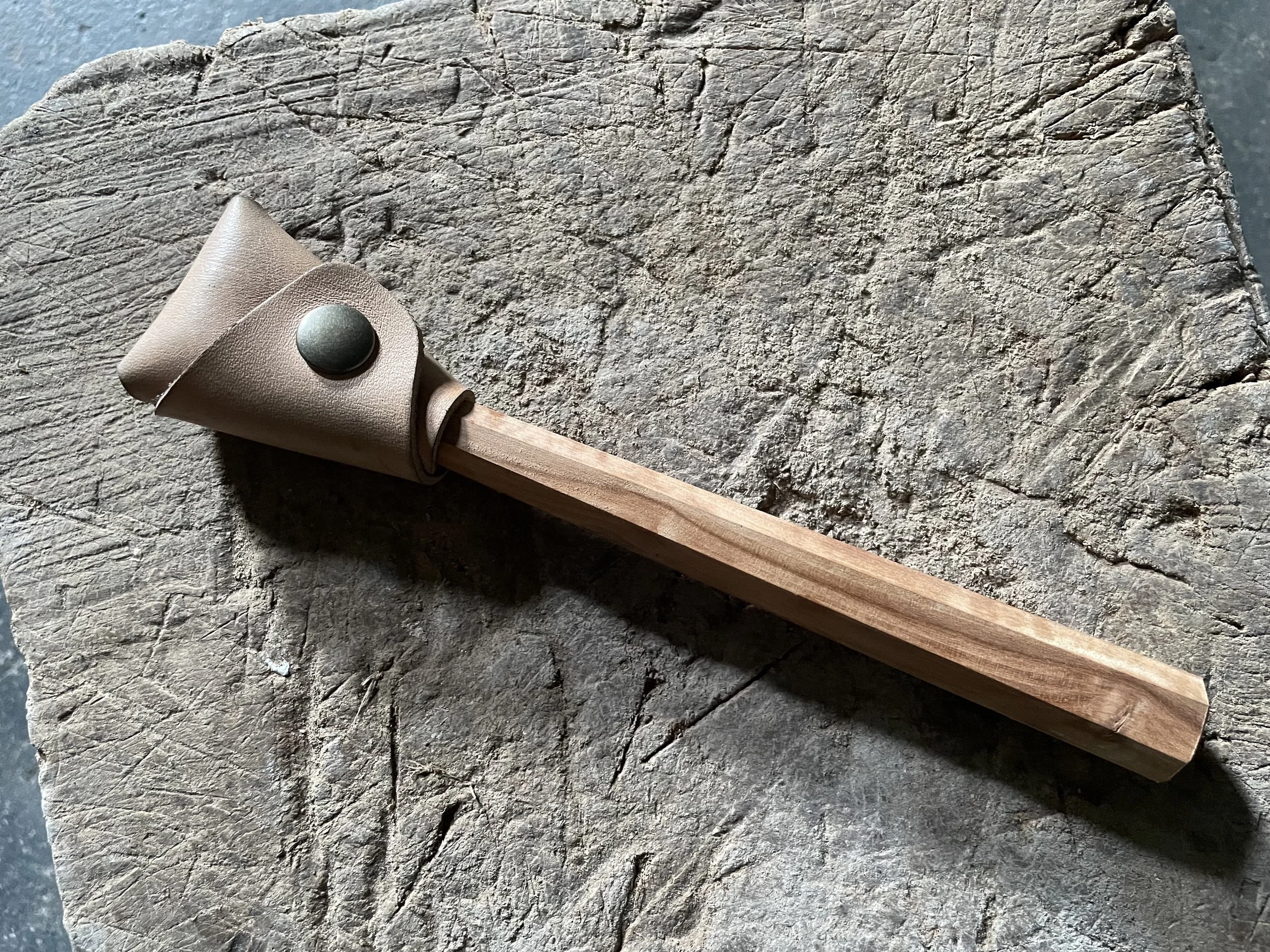
The Sheath
A sheath is crucial to protect your edge. I have never really been happy with any hook knife sheath I have bought over the years. I designed this one to be as easy as possible to put on and take off the knife. If it’s quick and easy to put on, you’re far more likely to use it. That’s the way I see it. I have been using this one for a few years and I love it. It’s made from a fairly thick leather.
Right-handed or Left-handed?
The knife comes in a left-handed and a right-handed version. Choose the one that suits your dominant hand. Some people like to have both a left- and a right-handed version to allow them to use certain grips that you couldn’t otherwise. Personally I do the vast majority of my carving with a right-handed knife and only rarely use a left-handed tool in certain specific circumstances.
A premium tool for carving wooden spoons. It comes with a very nice leather sheath.
I’ve been making and using my own tools for a few years now and I have slowly developed a tool that has all the best features from the many knives I own as well as my own unique additions. Having carved spoons professionally for nearly ten years, I can confidently say I know what makes a good hook knife. These are really good hook knives.
“It outperforms every hook knife I have tried. Thank you for your time and effort that you put into this knife”
- Timo, customer
The Blade
These handmade knives are inspired by my experience of carving thousands of spoons, using tools made by many great blacksmiths from around the world. They feature a compound curve, a convex bevel, a rounded spine and a forged hollow with finely ground rails.
Having a precisely shaped convex outer bevel makes the world of difference, especially as your spoon carving skills improve. The hollow inside surface is also a massive quality-of-life detail. It makes sharpening far easier. Not only do you have very little steel to remove when sharpening but you can easily avoid rounding over the inside surface. You hardly have to work on the outer bevel at all to maintain the knife.
The Steel
Currently, you can choose either high carbon steel or stainless steel. Both are high quality tool steels with the characteristics you want for spoon carving.
High carbon steels are the more common and traditional choice and many people favour it.
Stainless has the obvious benefit of corrosion resistance. Some fear that all stainless steels are harder to sharpen. This is somewhat of a misconception. While the stainless steel I use does have slightly higher wear resistance, I have had no trouble sharpening mine with regular aluminium oxide abrasives. That means it has better edge retention while also being slightly tougher than any low alloy carbon steel and having a very fine grain structure. All of these things are good!
The blade is heat treated in a specialised heat treatment kiln that is very precisely controlled. I have done a lot of testing to dial in the heat treatment processes. I am very confident in the precision of the process and the performance of the steels.
The Handle
The tapered octogonal handles are faceted for grip. They’re made from strong, dense apple wood and feature a solid brass bolster. The handle, at 160mm, is long enough to make it versatile for lots of different grips but not so long that it gets in your way.
The Sheath
A sheath is crucial to protect your edge. I have never really been happy with any hook knife sheath I have bought over the years. I designed this one to be as easy as possible to put on and take off the knife. If it’s quick and easy to put on, you’re far more likely to use it. That’s the way I see it. I have been using this one for a few years and I love it. It’s made from a fairly thick leather.
Right-handed or Left-handed?
The knife comes in a left-handed and a right-handed version. Choose the one that suits your dominant hand. Some people like to have both a left- and a right-handed version to allow them to use certain grips that you couldn’t otherwise. Personally I do the vast majority of my carving with a right-handed knife and only rarely use a left-handed tool in certain specific circumstances.

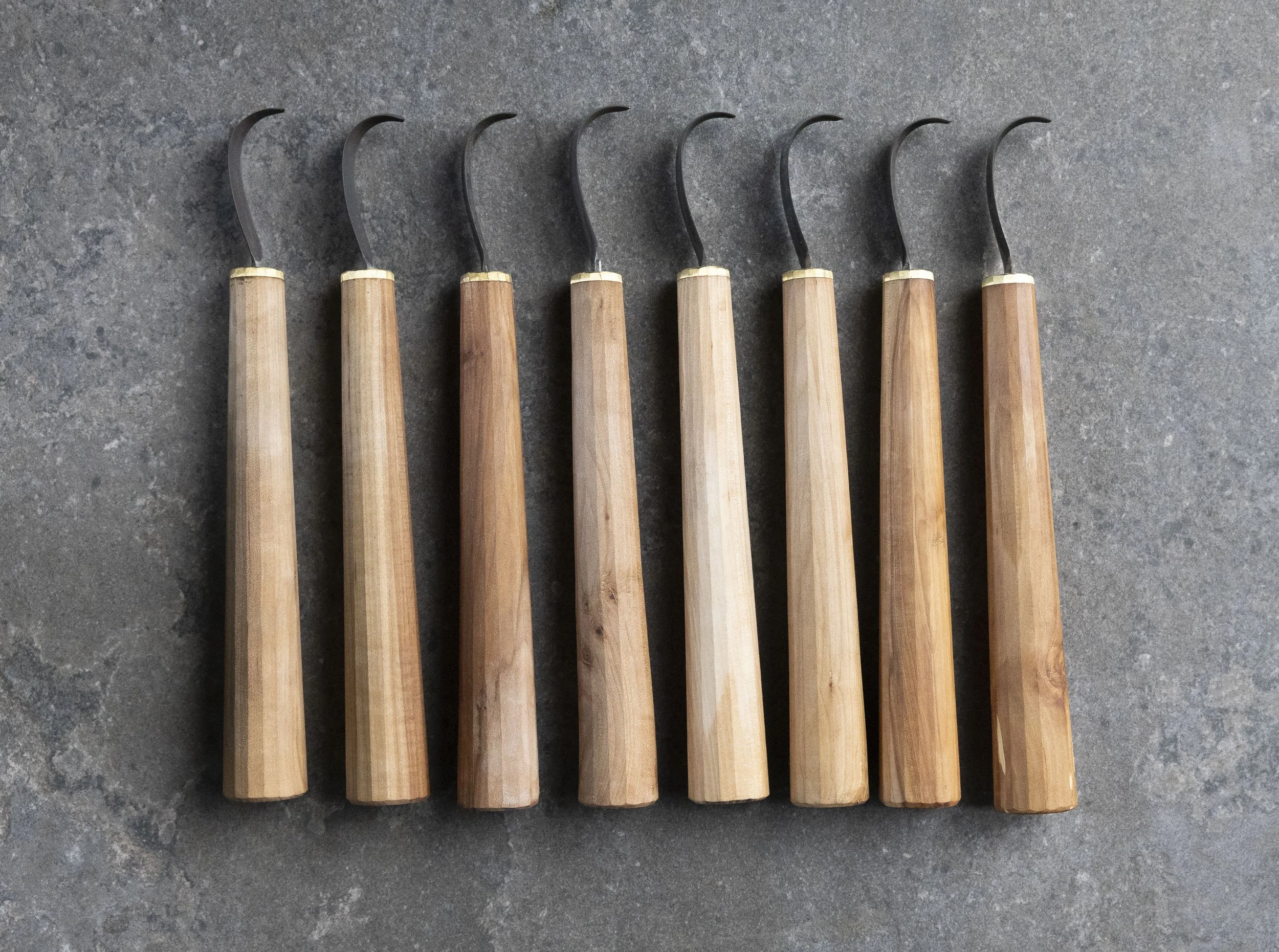 Image 1 of 9
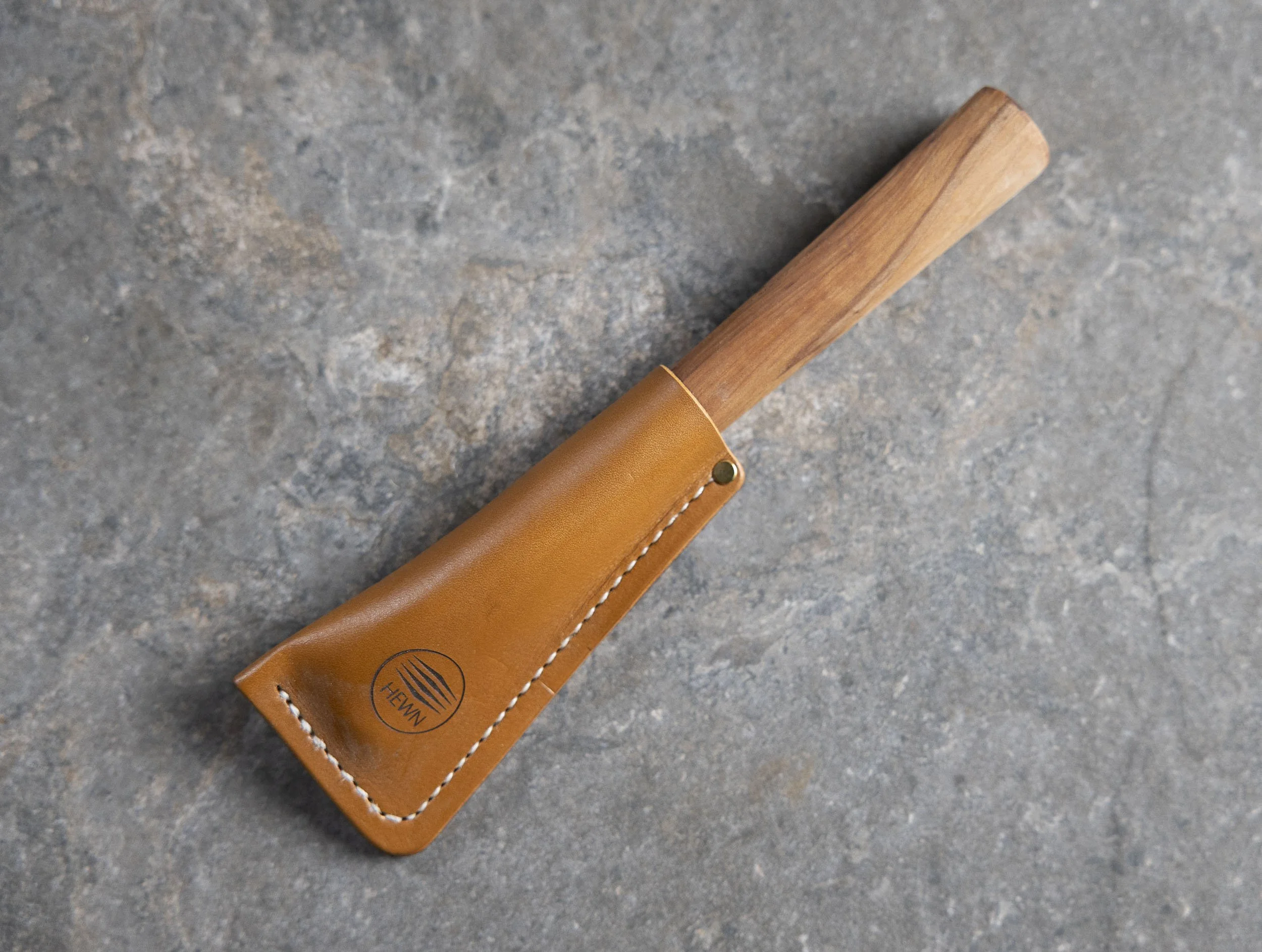 Image 2 of 9
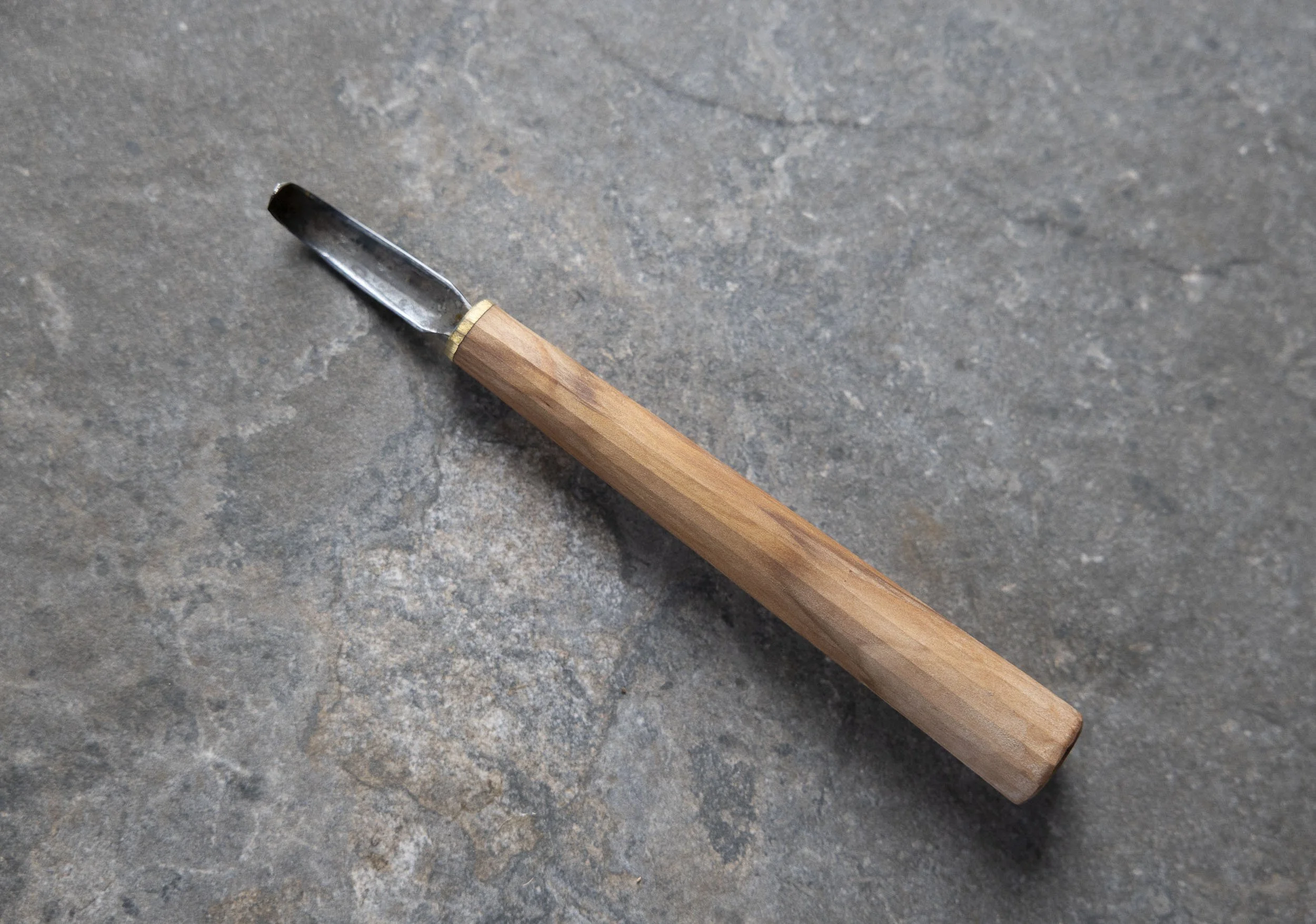 Image 3 of 9
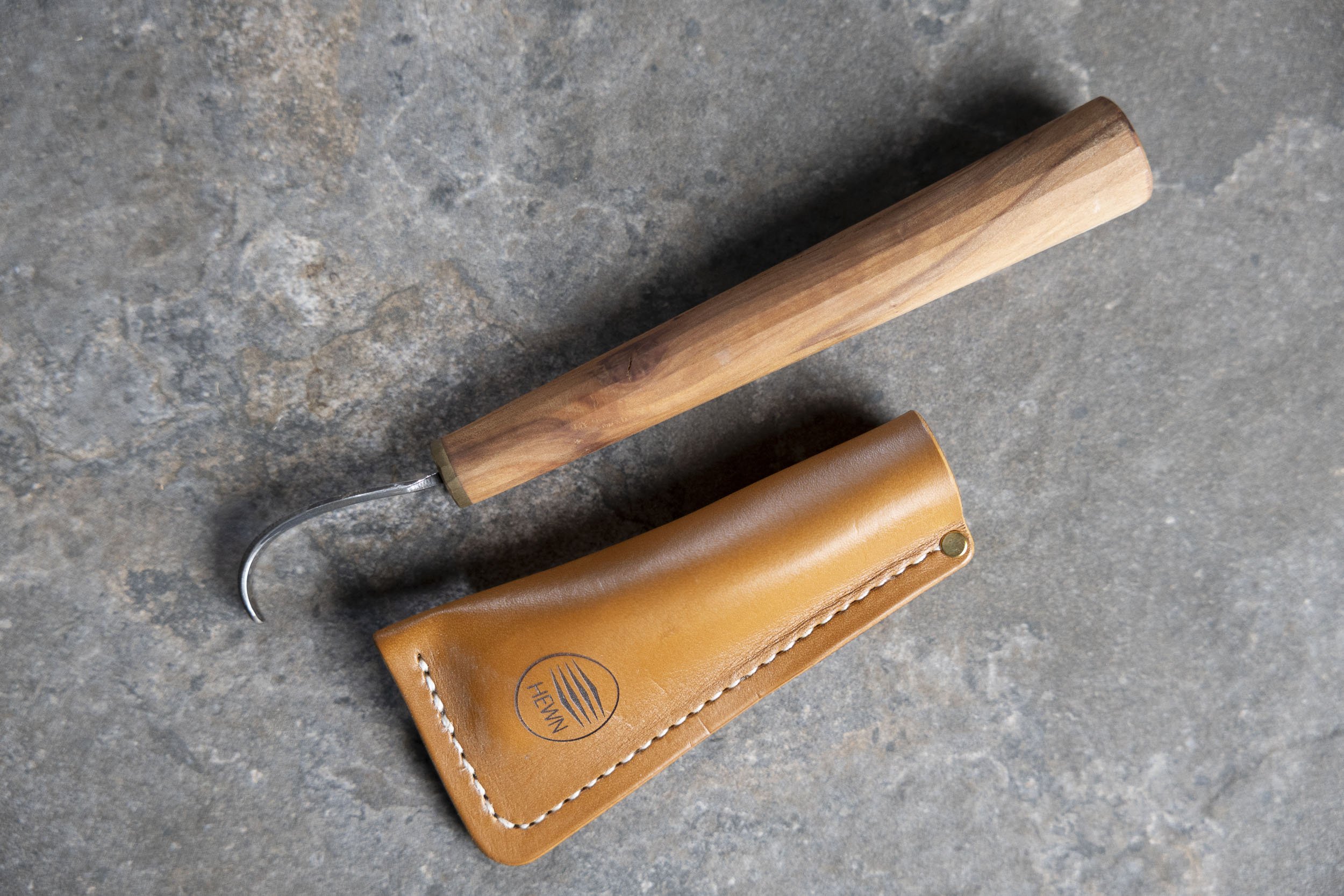 Image 4 of 9
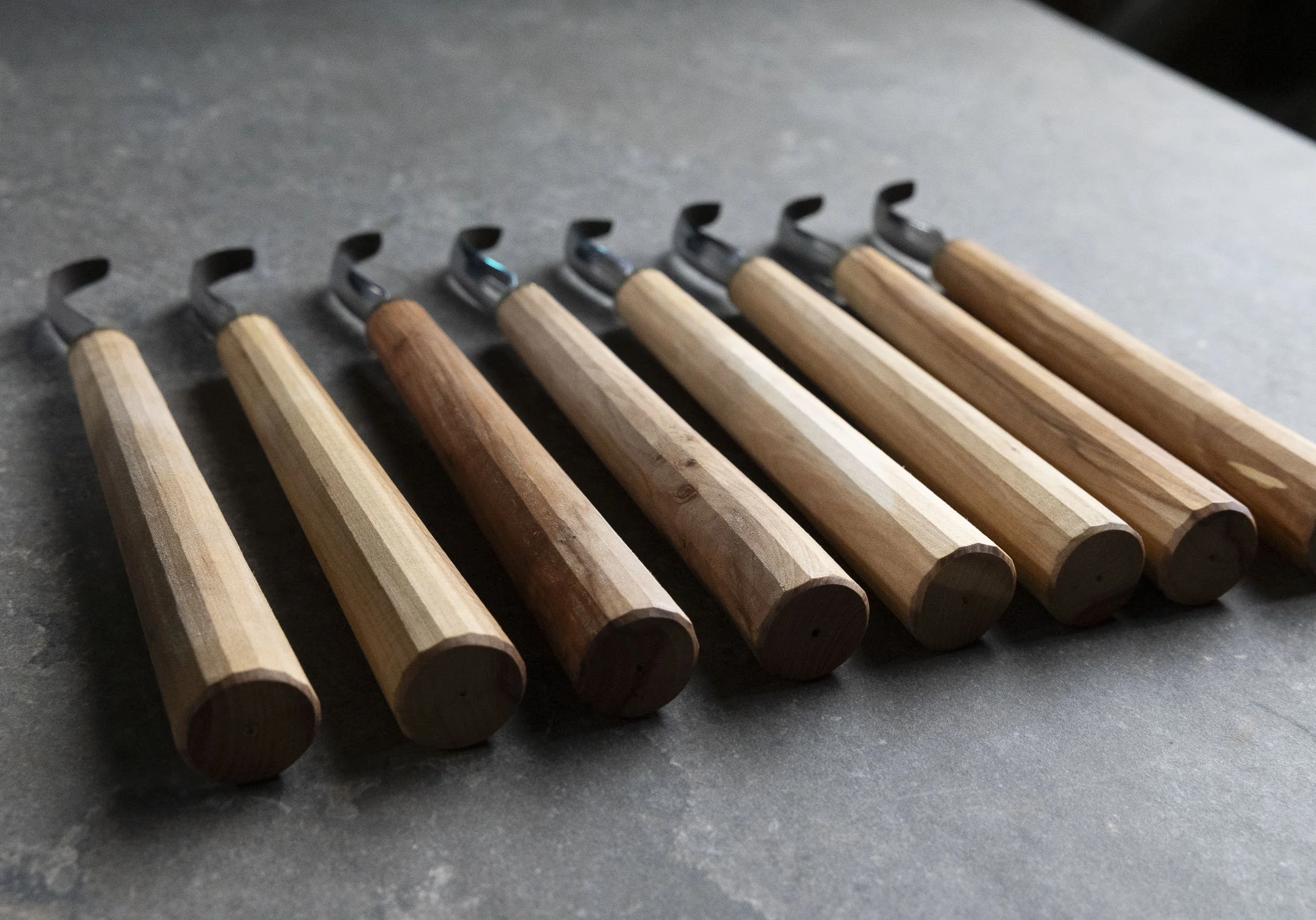 Image 5 of 9
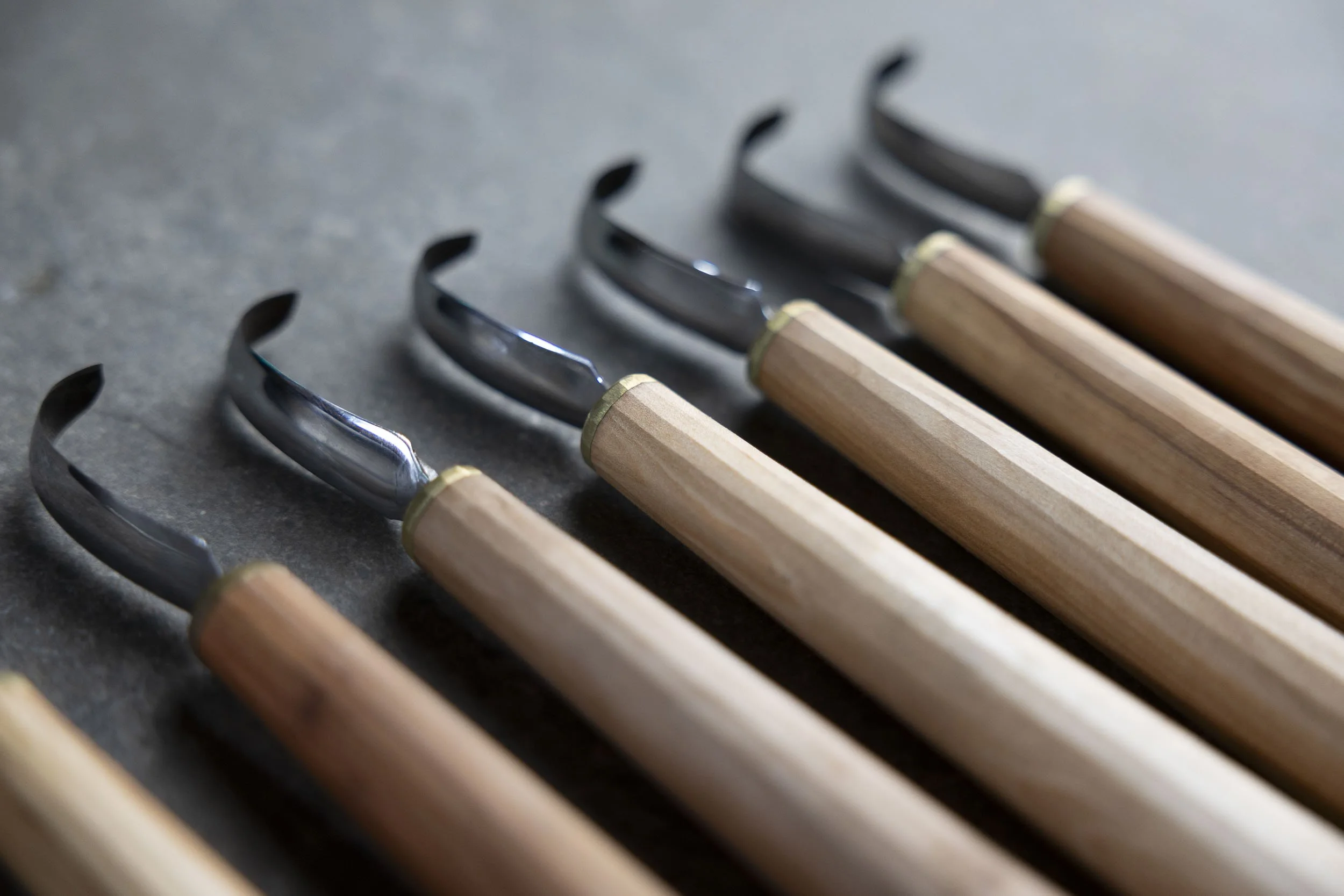 Image 6 of 9
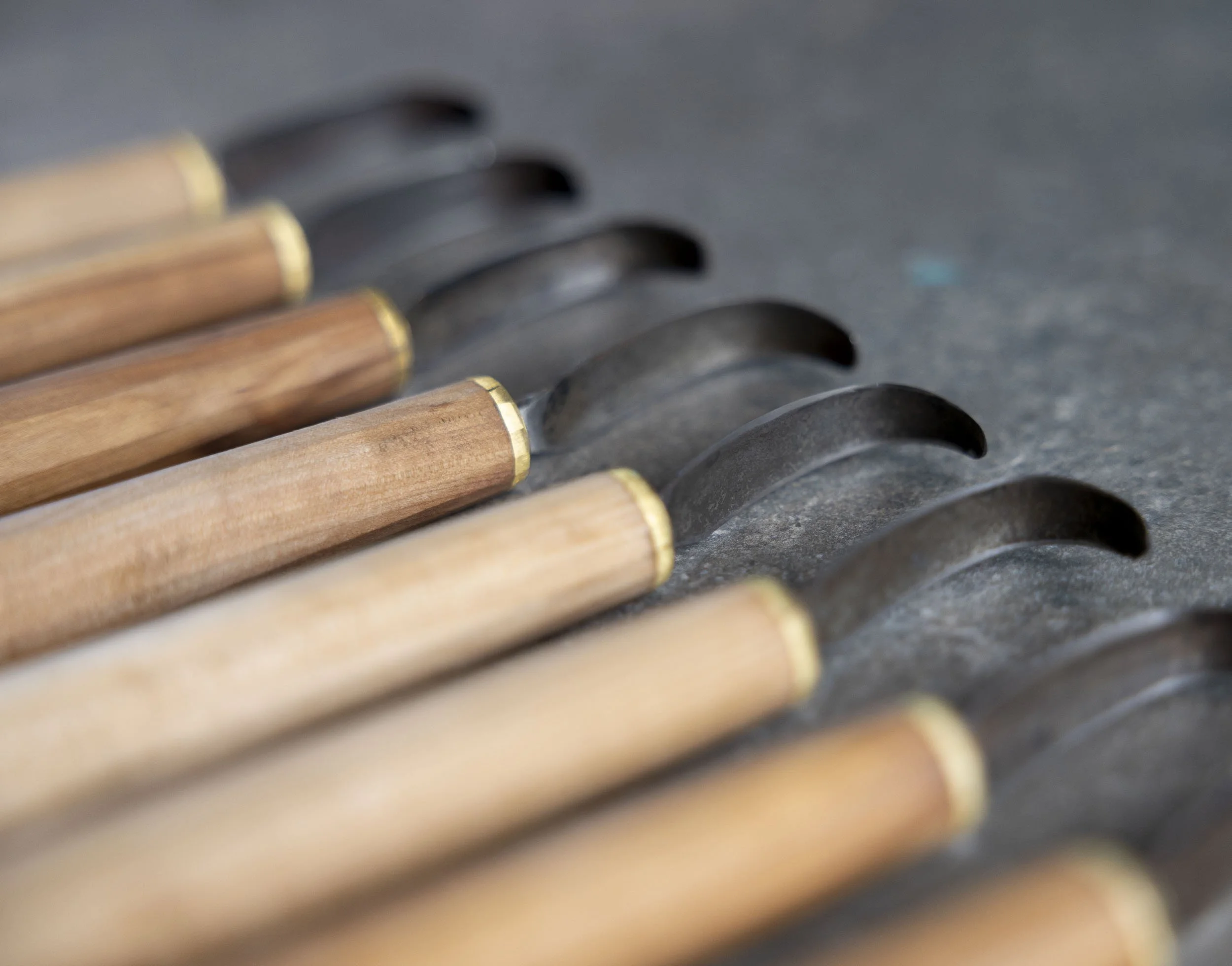 Image 7 of 9
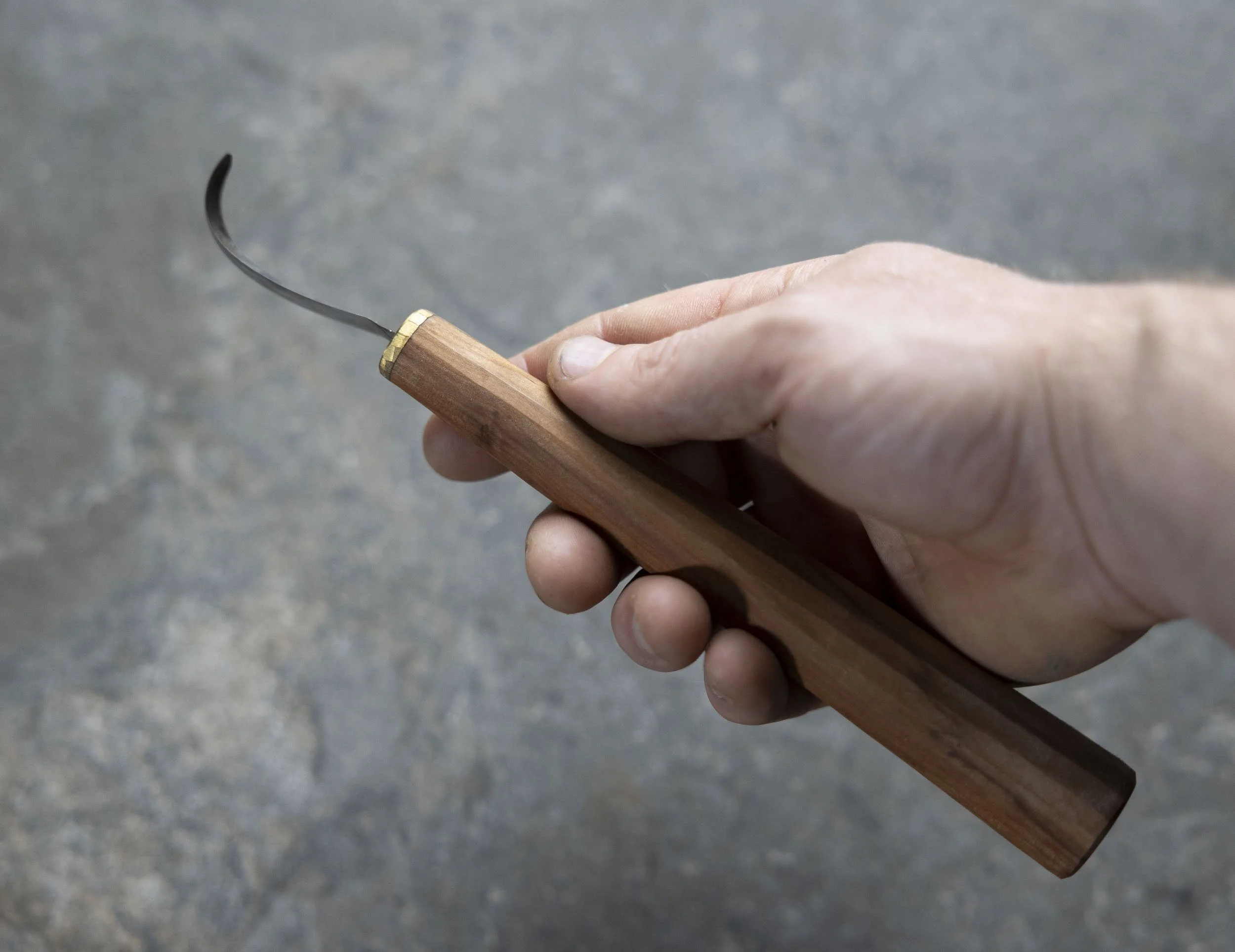 Image 8 of 9
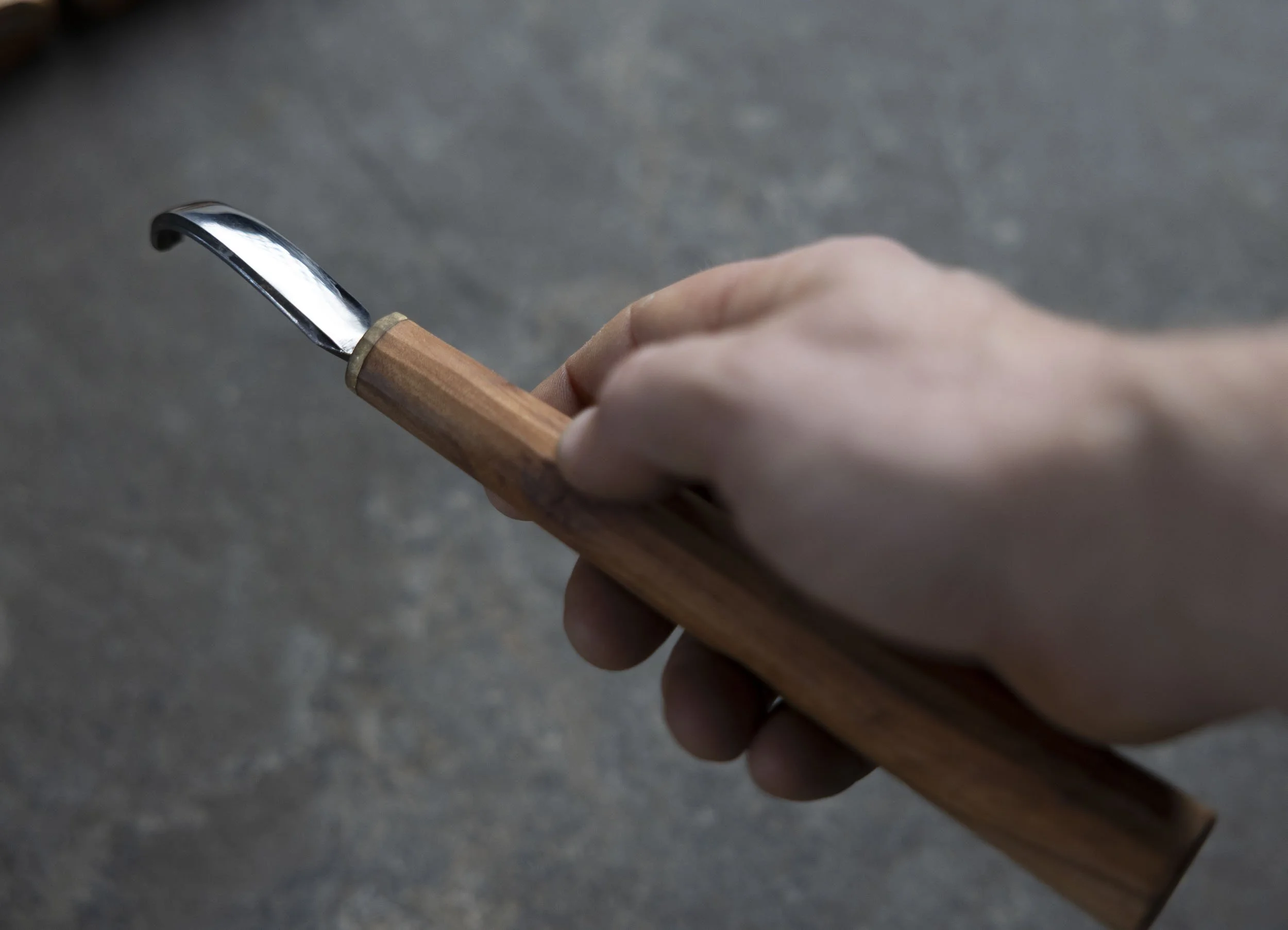 Image 9 of 9