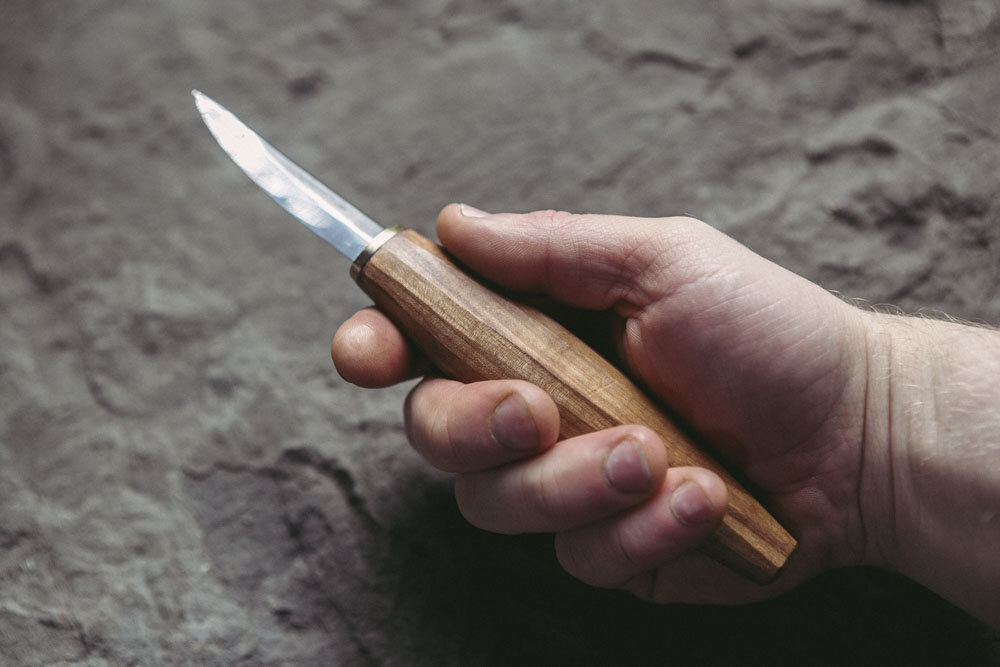
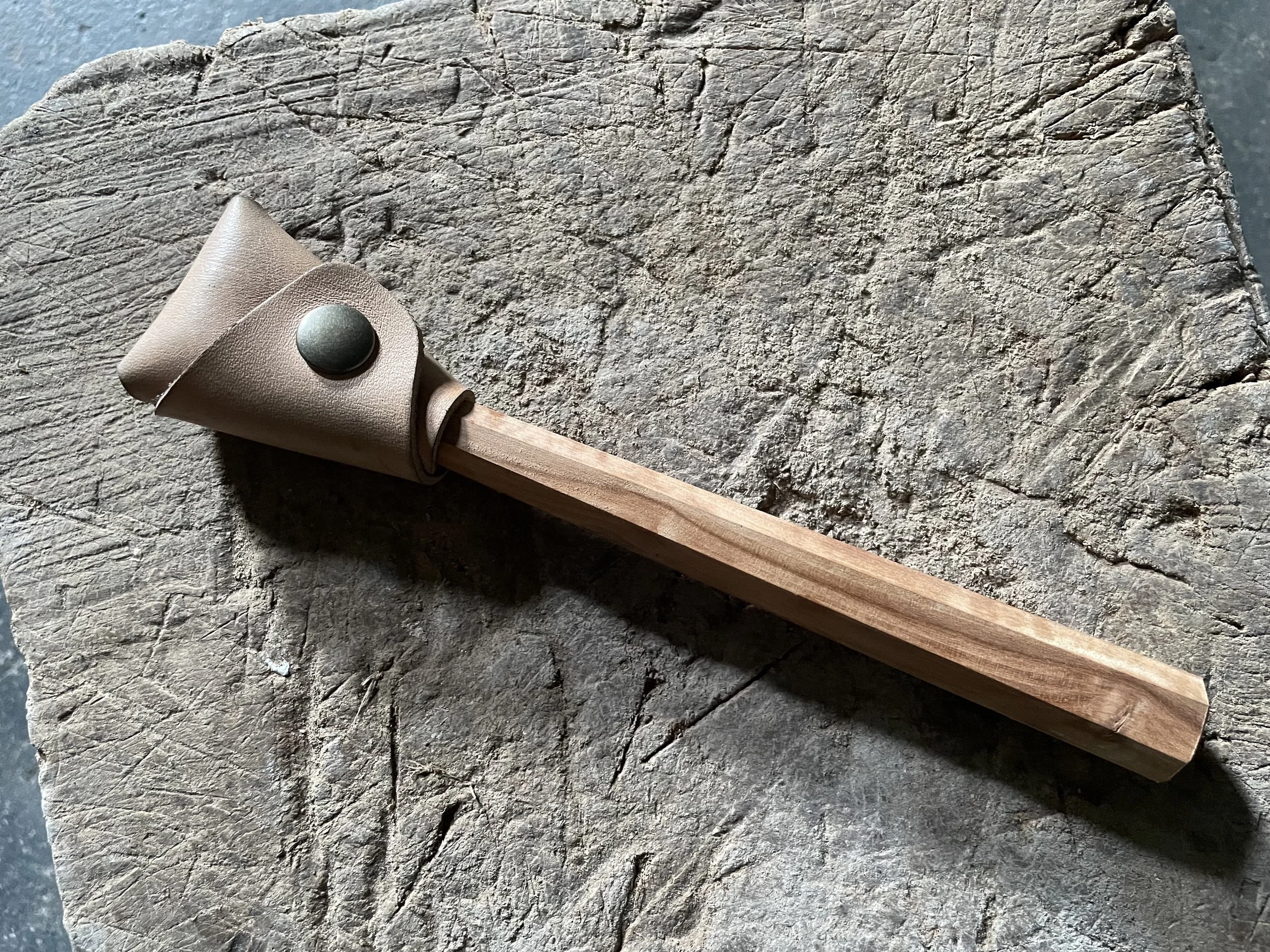
A high-performance hook knife with a versatile shape. If you prefer to buy the blade only, and make your own handles, this is the option for you. The tang is 8mm x 2.5mm rectangular section.
I have carved spoons professionally for nearly ten years and have used hook knives made by many excellent toolmakers. Over time, I began making my own, combining the best qualities of the knives I had used along with some of my own unique additions. After several years of refinement, this is the tool I’ve arrived at: great geometry, easy to sharpen and a joy to use.
“It outperforms every hook knife I have tried. Thank you for the time and effort you put into this knife.”
—Timo, customer
The Blade
The blade’s compound curve makes it very versatile. Different parts of the edge can be used for different parts of the spoon, allowing you to remove material efficiently, refine the shape of the bowl and achieve a smooth surface with the same knife.
The precisely formed convex bevel gives the edge strength and allows it to ride smoothly across a hollow shape. The rounded spine adds comfort, while the forged hollow and finely ground inner rails make sharpening straightforward.
That hollow is a particularly useful detail. Because only the narrow rails need to be sharpened, there is very little steel to remove and it is much easier to preserve the blade’s geometry. The outer bevel needs very little attention during routine sharpening.
The tang is 8mm x 2.5mm rectangular section.
The Steel
The blade is made from a high-alloy stainless tool steel, selected after extensive research, testing and practical use.
Traditional low-alloy carbon steels can make excellent carving tools, but this steel offers better performance. It takes a very fine, keen edge and combines excellent edge retention with toughness, resistance to chipping and rolling, and considerably better protection against corrosion. If you’re feeling some resistance to the idea of a stainless steel, I have written a separate article on why that might be and why I chose this steel.
Its greater wear resistance helps the edge remain sharp for longer without making the knife unnecessarily difficult to maintain. I sharpen mine with ordinary aluminium-oxide abrasives, just as I would a carbon-steel carving tool.
Stainless steel is sometimes regarded as a compromise made for convenience. This steel is not. I chose it primarily for its performance; its resistance to rust is an additional—and very welcome—advantage.
I think the reasons steels like this are less common in handmade carving tools are largely practical. They are more expensive and demanding to forge, grind and heat-treat. Those difficulties fall on the toolmaker, however, rather than the person using the finished knife.
Each blade is heat-treated in a precisely controlled kiln using a process I have carefully tested and refined. I have used this steel extensively myself and would not return to conventional carbon steel for these knives. It gives me everything I want from a carving blade, without the constant concern about rust.
Right-handed or Left-handed?
The knife is available in a left-handed and a right-handed version. Choose the one corresponding to your dominant hand. Some carvers own both, as the opposite-handed knife makes certain cuts and grips possible. Personally I do the vast majority of my carving with a right-handed knife and only rarely use a left-handed tool in certain specific circumstances.
A high-performance hook knife with a versatile shape. If you prefer to buy the blade only, and make your own handles, this is the option for you. The tang is 8mm x 2.5mm rectangular section.
I have carved spoons professionally for nearly ten years and have used hook knives made by many excellent toolmakers. Over time, I began making my own, combining the best qualities of the knives I had used along with some of my own unique additions. After several years of refinement, this is the tool I’ve arrived at: great geometry, easy to sharpen and a joy to use.
“It outperforms every hook knife I have tried. Thank you for the time and effort you put into this knife.”
—Timo, customer
The Blade
The blade’s compound curve makes it very versatile. Different parts of the edge can be used for different parts of the spoon, allowing you to remove material efficiently, refine the shape of the bowl and achieve a smooth surface with the same knife.
The precisely formed convex bevel gives the edge strength and allows it to ride smoothly across a hollow shape. The rounded spine adds comfort, while the forged hollow and finely ground inner rails make sharpening straightforward.
That hollow is a particularly useful detail. Because only the narrow rails need to be sharpened, there is very little steel to remove and it is much easier to preserve the blade’s geometry. The outer bevel needs very little attention during routine sharpening.
The tang is 8mm x 2.5mm rectangular section.
The Steel
The blade is made from a high-alloy stainless tool steel, selected after extensive research, testing and practical use.
Traditional low-alloy carbon steels can make excellent carving tools, but this steel offers better performance. It takes a very fine, keen edge and combines excellent edge retention with toughness, resistance to chipping and rolling, and considerably better protection against corrosion. If you’re feeling some resistance to the idea of a stainless steel, I have written a separate article on why that might be and why I chose this steel.
Its greater wear resistance helps the edge remain sharp for longer without making the knife unnecessarily difficult to maintain. I sharpen mine with ordinary aluminium-oxide abrasives, just as I would a carbon-steel carving tool.
Stainless steel is sometimes regarded as a compromise made for convenience. This steel is not. I chose it primarily for its performance; its resistance to rust is an additional—and very welcome—advantage.
I think the reasons steels like this are less common in handmade carving tools are largely practical. They are more expensive and demanding to forge, grind and heat-treat. Those difficulties fall on the toolmaker, however, rather than the person using the finished knife.
Each blade is heat-treated in a precisely controlled kiln using a process I have carefully tested and refined. I have used this steel extensively myself and would not return to conventional carbon steel for these knives. It gives me everything I want from a carving blade, without the constant concern about rust.
Right-handed or Left-handed?
The knife is available in a left-handed and a right-handed version. Choose the one corresponding to your dominant hand. Some carvers own both, as the opposite-handed knife makes certain cuts and grips possible. Personally I do the vast majority of my carving with a right-handed knife and only rarely use a left-handed tool in certain specific circumstances.

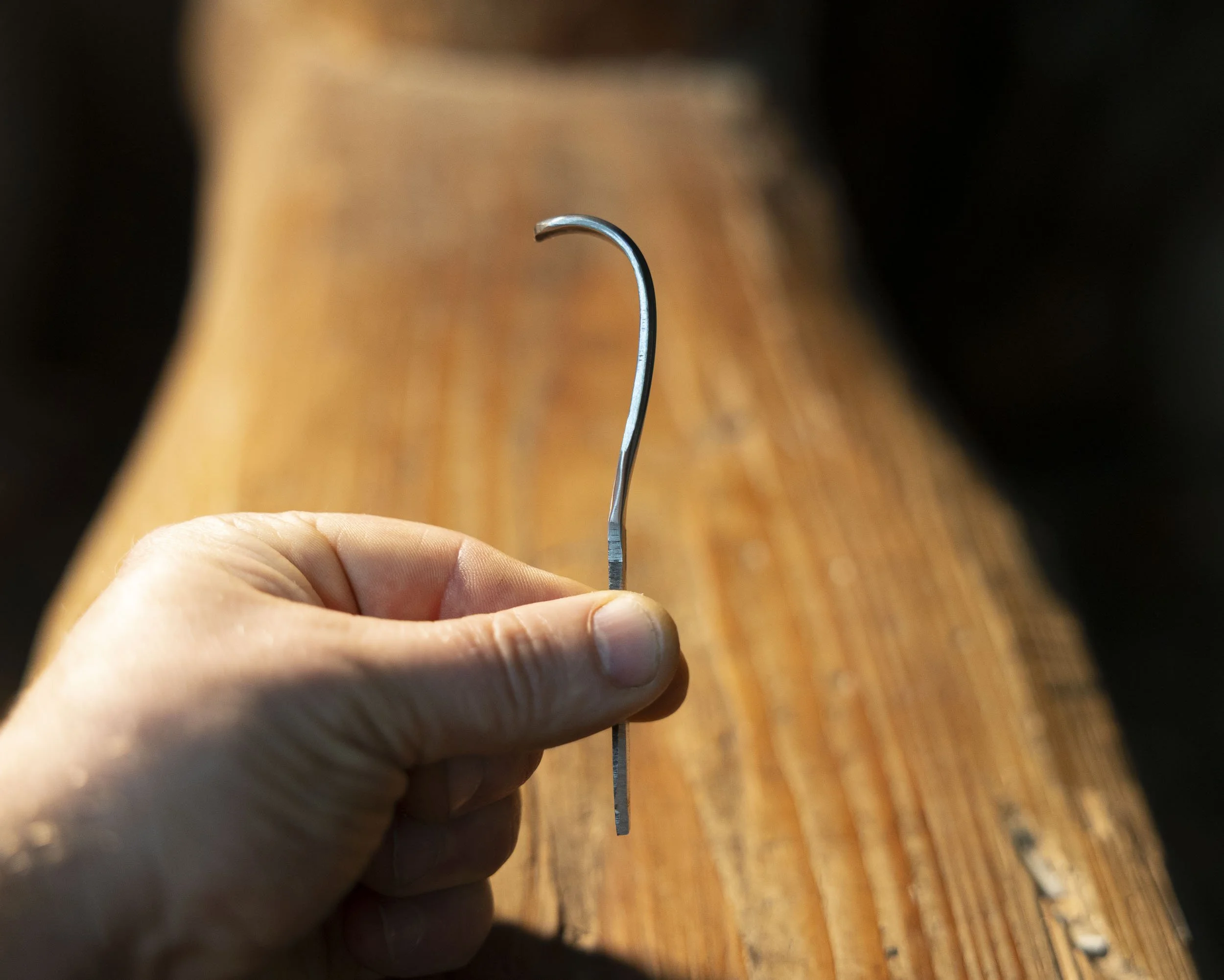 Image 1 of 4
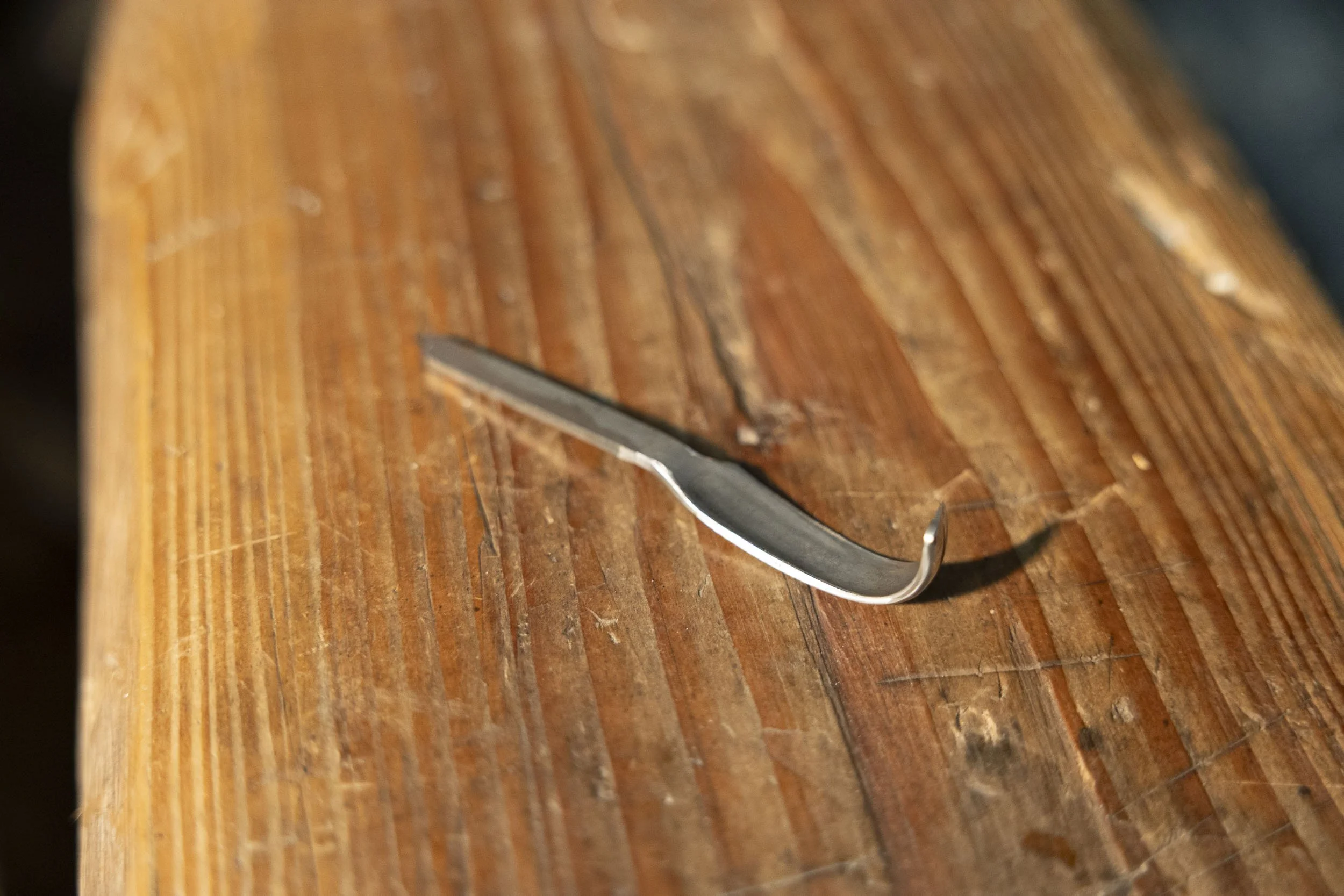 Image 2 of 4
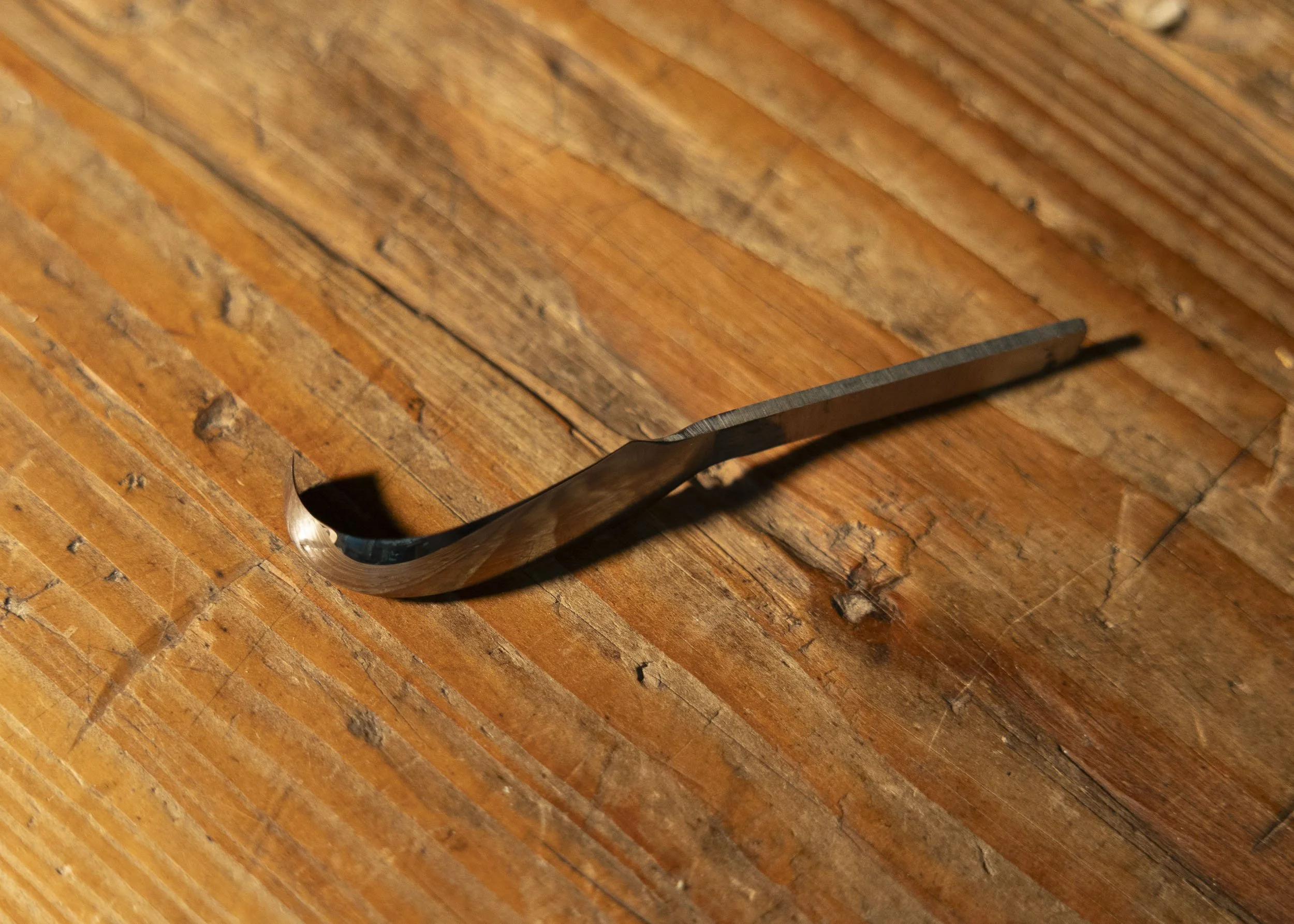 Image 3 of 4
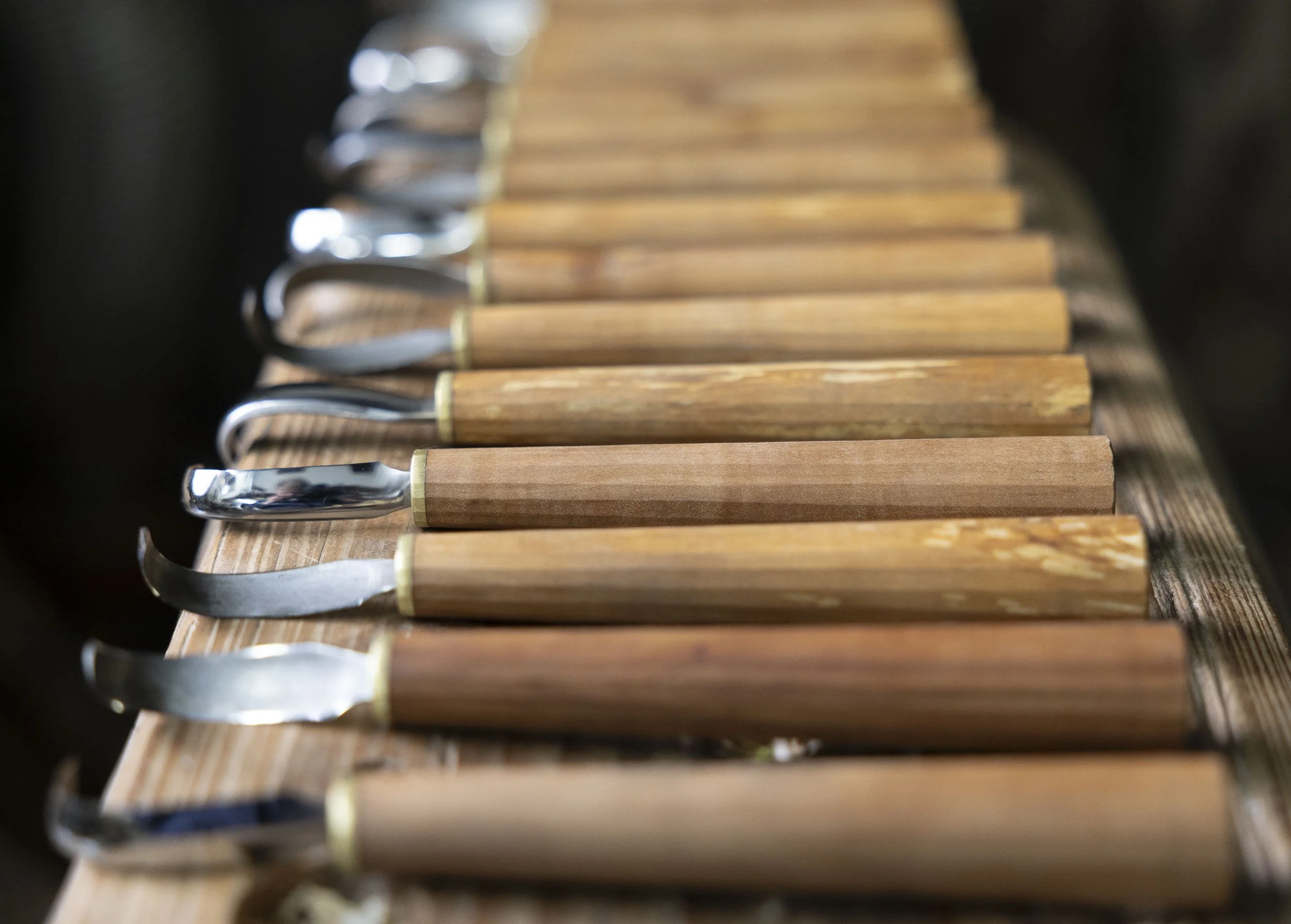 Image 4 of 4